
Best Low Volatility Slots UK: What to Know
 Available in GB
Explore how win frequency, risk, RTP and UK rules shape the experience of lower-volatility slots.

Table of Contents
- What Low Volatility Really Means in a Slot
- Low Volatility vs High Volatility: Frequency, Risk and RTP
- How Low Volatility Slot Machines Behave in Practice
- Reading Low Volatility Slot Games Through the UK Rulebook
- Pragmatic Play and the Limits of Naming a Low Volatility Slot
- Low Volatility Slots for Bonus Wagering: A Compliance-Minded View
- A Useful List of Low Volatility Online Slots Without Invented Titles
- Small Wins, Long Sessions and the Shape of Low Volatility Gameplay
- Can Low Volatility Slots Really Offer RTP Above 98%?
- Checking the Machine Behind the Percentage
What Low Volatility Really Means in a Slot
A low-volatility slot is designed around the rhythm of play rather than the size of its most spectacular possible payout. Its results tend to include wins more frequently, with those wins generally being smaller. The balance is familiar: fewer dramatic swings, more modest changes to the bankroll, and a session that may feel less like a sequence of cliffs.
That description concerns the distribution of results. It does not mean that every spin wins, that losses disappear, or that a particular outcome is due. Randomness remains part of the game. “Low volatility” is therefore a description of the game’s mathematical character, not a promise made about the next spin.
RTP is a different measure. The return to player expresses a theoretical long-run percentage return across a large number of plays. It says something about the expected relationship between stakes and returns over time. It does not describe how often wins arrive, how large they feel, or how sharply the balance moves during one session.
The distinction matters because two slots can present similar RTP figures while producing very different experiences. One may offer a steadier succession of smaller wins; another may produce longer quiet stretches interrupted by larger payments. RTP addresses long-run return. Volatility addresses the shape and rhythm of outcomes.
In British regulatory language, the relevant product term is often gaming machine, while “slot” remains common shorthand. The shorthand is convenient, but the mathematics still deserves precision. Low volatility means a gentler pattern of variation—not a safer result, and certainly not a reliable one.
Low Volatility vs High Volatility: Frequency, Risk and RTP
The difference between low- and high-volatility slots is mainly a difference in rhythm. A low-volatility game is associated with more frequent wins that tend to be modest. A high-volatility game is associated with less frequent wins, with greater variation in the size and timing of outcomes. Neither description says what a particular spin will produce. It describes the shape of results over a large number of plays.

That distinction matters because “risk” is often used too loosely. High volatility can make a balance move sharply: a substantial win may arrive after a long sequence without one, while a low-volatility game may produce a steadier run of smaller outcomes. Low volatility can therefore feel less severe from one spin to the next, but it is not a promise of profit or protection from loss. Gambling remains a matter of chance. The machine has not developed a conscience.
Three questions, not one
Volatility, win frequency and RTP describe different features of a game.
Win frequency concerns how often winning outcomes occur. It says nothing by itself about the value of those wins. Frequent small prizes and occasional larger prizes may produce very different sessions even where the number of winning spins is similar.
Volatility concerns the distribution of outcomes. Low volatility points towards smaller fluctuations; high volatility points towards wider swings. It does not identify the most likely result of the next spin, nor does it establish whether a game is suitable for a particular budget.
RTP, or return to player, is a theoretical long-run percentage return. It is not a schedule of payments and does not mean that a player receives that proportion during a short session. RTP therefore cannot answer the question “How often will this game win?” A high RTP game may still have a high-volatility structure, while a low-volatility game may not have the highest RTP available.
This is why phrases such as “high RTP, low volatility” need to be read as two separate claims. The first concerns a theoretical return over the long run; the second concerns the pattern of variance around individual results. One does not prove the other.
High volatility versus low volatility in play
A high-volatility slot can appeal to players who accept uneven results in exchange for the possibility of more conspicuous payouts. The cost of that shape is uncertainty between wins. A low-volatility slot tends to offer a quieter sequence: more modest winning outcomes may interrupt losing spins more often, while large prizes are less central to the experience.
Low Volatility Frequent, modest wins
High Volatility Less frequent, larger variation
RTP Theoretical long-run return
That contrast is about experience as well as mathematics. Someone watching a balance may notice that high volatility creates sudden rises and falls. With low volatility, the movement can appear less dramatic, although repeated losing outcomes remain possible. The word “low” is not a synonym for safe.
RTP adds another layer. Two games can have the same volatility classification and different theoretical returns. Two games can also share an RTP figure while producing sharply different patterns of wins. Comparing only the percentage leaves out the feature that most affects the feel of a session: how outcomes are distributed.
The most honest comparison is therefore:
| Feature | Lower volatility | Higher volatility |
|---|---|---|
| Typical rhythm | More frequent, smaller wins | Less frequent, more variable wins |
| Balance movement | More gradual fluctuations | Wider rises and falls |
| Main uncertainty | Whether modest wins cover losing results | How long the gaps between wins may feel |
| RTP question | Theoretical long-run return | Theoretical long-run return |
| What RTP does not show | Win timing or prize pattern | Win timing or prize pattern |
The table is a description, not a recommendation. A player’s tolerance for uneven results is a personal matter, and no volatility label removes the underlying chance.
The UK machine framework uses different labels
In Britain, the legal language for physical gaming machines does not classify them as low or high volatility. UK gaming machines are categorised according to the maximum stake and prize available. The categories are A, B1, B2, B3, B3A, B4, C and D.
That is a different filing cabinet. Volatility describes the statistical character of game outcomes; a UK machine category describes permitted stake and prize limits. A Category C machine, for instance, is not automatically “low volatility” or “high volatility” merely because it belongs to that category. The category does not answer the question of how often its games win or how widely their results vary.
Category B1 illustrates the point particularly clearly. There is no minimum RTP requirement for B1 machines, but the minimum average return must be displayed to the player. The displayed return addresses a disclosure requirement. It does not convert the machine into a low-volatility product, and it does not reveal the complete rhythm of winning and losing outcomes.
This separation prevents a common shortcut: treating a legal category as though it were a volatility rating. The law asks what stakes and prizes a machine may offer. Volatility asks how its outcomes are shaped. RTP asks about theoretical average return over the long run. Three different questions. Three different answers.

For online slots, the relevant game information may use volatility and RTP language, but those terms still need to be kept apart. For physical machines in the UK, the public framework begins with the category and its permitted stake and prize structure. Neither system turns a percentage into a promise.
How Low Volatility Slot Machines Behave in Practice
A low-volatility slot machine is experienced less as a succession of dramatic events than as a steady run of modest results. Wins may appear more often, but their size is generally restrained. The practical attraction is not a promise of profit; it is the way the balance can move in smaller steps rather than lurching between long silences and rare, conspicuous payouts.
That distinction matters because volatility belongs to the machine’s pattern of outcomes, not to its legal category. A machine can be permitted in a casino, pub or adult gaming centre without the venue telling anyone whether its play is low or high volatility. The law is interested in stake, prize, location and access. The player notices rhythm.
What the player actually sees
On a lower-volatility machine, a session may contain repeated small wins, partial returns or combinations that soften the effect of losing spins. The visible result is a less theatrical sequence: money leaves, some of it comes back, and the balance may last longer than it would on a machine built around infrequent larger awards.
Risk Warning
Low volatility is not a promise of profit or protection from loss; gambling remains a matter of chance.
That does not make the outcome safe. A series of small wins can still be outweighed by the stakes placed over the session. “Low volatility” describes the distribution of results, not a protective mechanism. A machine can feel gentle while gradually reducing the balance. The arithmetic remains unimpressed.
The relationship between stake and prize is easier to observe than volatility itself. A low-volatility game played at a larger stake can expose a bankroll to faster losses than a more volatile game played at a smaller stake. The label alone therefore says little about how long a particular session will last. Stake size, the number of plays and the machine’s disclosed return information all belong to the same practical picture.
Legal category is not playing style
The British classification system uses maximum stake and maximum prize. It does not create a statutory class called “low volatility”. This is why a machine’s location and legal limits should not be mistaken for a description of its behaviour.
Category B1 machines have a maximum stake of £5 and a maximum prize of £10,000. They can only be made available in casinos. Those figures describe the permitted ceiling, not the frequency of wins or the character of the game. A B1 machine might be discussed by players in terms of volatility, but its category does not establish that profile.
Category B3A machines have a maximum stake of £2 and a maximum prize of £500. Their legal identity is likewise defined by those limits and by where they may be placed, rather than by whether outcomes arrive in a smooth or uneven pattern. A smaller permitted stake does not automatically turn a machine into a low-volatility product.

Category C machines offer a particularly familiar British comparison. They are the classic pub fruit machine, with a £1 maximum stake and a £100 maximum prize. They may be made available in pubs, licensed family entertainment centres, clubs, bingo premises, adult gaming centres, betting shops, tracks with pool betting and casinos. None of those permissions is a volatility statement. It is a map of premises.
Category D machines have no age restriction, but that fact says nothing about the frequency or size of their wins. Age access and game mathematics answer different questions. Confusing them would be like treating a cinema’s opening hours as a review of the film.
Bankroll duration and machine design
Players often use “longer session” as shorthand for lower volatility. The phrase is understandable, but it should not be treated as a measured promise. Repeated smaller outcomes may reduce the feeling of abrupt depletion, while a larger stake or extended play can still exhaust the balance. Duration is produced by the interaction between the player’s stake and the machine’s results, not by a label operating in isolation.
This is also why lists of the best low-volatility slot machines can be misleading when they offer names without evidence about the underlying game information. A useful comparison would need to separate the machine’s disclosed return information from its volatility description, then consider the permitted stake and prize. Without that separation, a “top” list becomes decoration.
For the same reason, examples should be treated cautiously. The phrase “low-volatility slot machines UK” may suggest a neat national catalogue, but British regulation supplies categories and venue permissions, not an official ranking of gentle machines. The product may be described commercially; the legal framework does not certify the description.
Maximum stake: £5 Maximum prize: £10,000 Available in casinos
Maximum stake: £2 Maximum prize: £500 Available in members’ clubs or miners’ welfare institutes
Maximum stake: £1 Maximum prize: £100 Available in pubs, clubs, and bingo premises
In practice, the most revealing features are therefore modest ones: how often small outcomes occur, how much of the stake returns, what the machine displays, and what its permitted limits are. A lower-volatility pattern can make play feel less jagged. It cannot rewrite the stake, enlarge the prize, or turn a legal classification into a guarantee.
Reading Low Volatility Slot Games Through the UK Rulebook
A low volatility slot game is a product of mathematical design, but its legal life depends on something less romantic: where the gaming machine stands, who may enter the premises, and which category the machine occupies. In Great Britain, volatility is not the organising principle of the rulebook. Gaming machines are categorised according to the maximum stake and prize available. The law prefers limits to moods.
That distinction matters when discussing low volatility casino games in the United Kingdom. A machine may produce frequent, modest outcomes and therefore fit a player’s idea of lower-risk play, yet its legal classification is determined by its permitted stake, prize, machine type and location. The appearance of a machine tells very little on its own.
Volatility is not a premises licence
The phrase “low volatility slot games UK” describes a style of gameplay, not a legal permission. The rulebook does not create a separate licence for casino games with low volatility. Instead, relevant machines appear within established categories and approved premises.

Category B2 gaming machines may be located in casinos operating under the 2005 Act or the 1968 Act, as well as in betting shops and tracks with pool betting. Category B3 gaming machines may be made available in casinos, betting shops, tracks with pool betting, bingo premises and adult gaming centres. Category B4 machines can appear in clubs, bingo premises and adult gaming centres.
None of those location rules proves that a particular machine is a low volatility slot. They only establish where the relevant category may lawfully be offered. A low volatility slot example, if one were being assessed, would still need to be considered through its disclosed game information rather than inferred from the premises in which it appears.
The machine category does the legal work
People often use “slot” as a broad everyday label. British regulation is more exact. A gaming machine belongs to a category with defined conditions, while a low volatility slot game is a descriptive term about the distribution of outcomes. The two descriptions can sit alongside each other, but they answer different questions.
The category asks:
- Where may the machine be made available?
- What stake and prize limits apply?
- Which premises and permissions are relevant?
- What technical and display requirements govern it?
Volatility asks how the game’s outcomes are shaped over play. It does not replace the category, and it does not grant access to premises. Calling a machine one of the best low volatility slot games cannot alter those facts. A flattering adjective has never been a premises licence.
Where adult gaming centres fit
An Adult Gaming Centre licence permits unlimited Category B3, C and D machines. That permission concerns the number and categories of machines available at the venue; it does not turn every machine into a low volatility product.
For someone comparing low volatility slot games, the useful question is therefore not whether an Adult Gaming Centre contains many machines. It is whether the particular machine provides reliable information about its design and return, and whether its category and placement comply with the relevant rules. Quantity is a feature of the venue. Volatility remains a feature of the game.
UK Machine Categories
UK gaming machines are categorised by maximum stake and prize availability, not by volatility.
Categories include A, B1, B2, B3, B3A, B4, C, and D. A machine’s category describes its legal limits and permitted venues, whereas volatility describes the statistical distribution of outcomes.
The same care is needed with Category B3 machines. They may be offered in several types of premises, including casinos, betting shops, tracks with pool betting, bingo premises and adult gaming centres. That range does not create a single B3 playing experience, nor does it establish that B3 machines are inherently high or low volatility. The category describes the regulated machine framework, not the rhythm of its results.
Clubs, bingo premises and pubs
Category B4 gaming machines can appear in clubs, bingo premises and adult gaming centres. Again, the permitted setting says where the machine may be found, not whether its gameplay belongs among low volatility casino games.
Pubs operate within a narrower arrangement. An alcohol-licensed pub is automatically entitled to up to two Category C or D machines if it notifies the local licensing authority. This is a premises entitlement, not a general invitation to install any machine that happens to resemble a fruit machine or slot. Category C and Category D are legal classifications with their own boundaries.
That pub setting also illustrates why casual language can mislead. A machine beside a bar may look familiar, but its presence does not reveal its volatility profile. Nor does a machine in a casino automatically qualify as a top low volatility slot game. The venue supplies context, not a performance verdict.
Age controls remain separate
Age restrictions are another part of the rulebook that should not be confused with volatility. A low volatility casino game is still gambling. Its relatively frequent smaller outcomes do not make it a children’s product or soften the legal conditions attached to the machine.
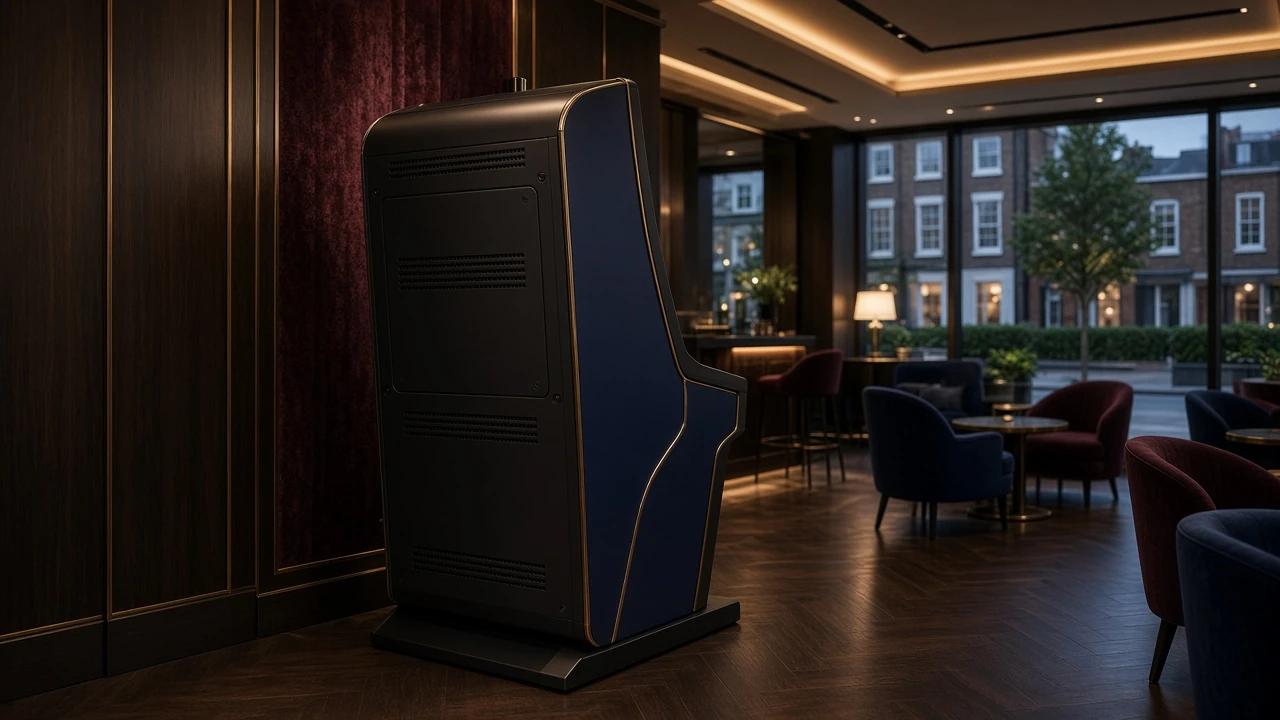
Category B3 machines may only be played by adults aged 18 and over, and persons under 18 must not enter the B3 machine area. Category C machines are also restricted to adults aged 18 and over. Category D machines have no age restriction, but that distinction belongs to the machine category and applicable rules, not to the emotional impression created by its gameplay.
So the phrase “low volatility” should never be used as a shortcut for “low consequence” or “suitable for everyone”. Regulation draws its lines elsewhere: around machine category, premises, age and permissions. The mathematics may make a session feel quieter. The rulebook remains wide awake.
Pragmatic Play and the Limits of Naming a Low Volatility Slot
The phrase “low volatility Pragmatic Play slots” sounds more precise than the available evidence allows. It combines a provider name with a playing characteristic, as though every game from that provider carried a public volatility label that could be checked and ranked. That assumption is unsafe.
A provider association does not, by itself, establish that a game is a low volatility slot. Nor does the presence of familiar reels, frequent-looking features or modest advertised prizes prove a slot low volatility. Volatility describes the distribution and rhythm of outcomes; it is not a brand signature.
What can actually be assessed
A careful assessment starts with information disclosed for the individual game. Relevant material may include:
- the stated RTP, where it is published;
- the game rules and paytable;
- the available stake and prize information;
- any disclosed volatility description;
- the identity of the provider and the licensed operator offering the game.
These details answer different questions. RTP concerns theoretical long-run return, while volatility concerns the pattern through which results arrive. A high RTP does not turn a game into the best low volatility slot, and a provider’s reputation cannot fill a missing disclosure.
The same caution applies to the phrase “Pragmatic Play low volatility slots 2026”. The year changes the reader’s expectation of current information, not the evidential standard. A title should not be placed in that category merely because a review, affiliate page or informal list describes it that way. Where the official game information does not disclose volatility, the honest description is that the classification cannot be verified from the available material.
This is less exciting than a confident ranking. It is also more useful.
Why a provider list can mislead
A software provider may offer games with different mathematical profiles. Treating all of them as one family creates a false shortcut: the name above the game is mistaken for the behaviour inside it. Even a published RTP figure would not resolve that problem, because return and volatility measure separate aspects of the design.
- Check the stated RTP in the game rules
- Verify the provider and licensed operator
- Review the game’s disclosed volatility description
- Assume a provider’s name guarantees a specific volatility
- Treat a legal machine category as a volatility rating
- Use “low volatility” as a synonym for “safe”
There is also a regulatory distinction behind the terminology. In Britain, gaming machines are categorised according to maximum stake and prize, not according to an online provider label such as “low volatility”. A Pragmatic Play title offered online therefore cannot be assigned a British machine category simply because its gameplay appears gentler.
The defensible approach is narrow: identify the provider only where that identity is disclosed, record the game information that is actually published, and avoid calling a title low volatility when the evidence does not say so. No verified Pragmatic Play game names are available for a supported ranking here. A trustworthy account must leave that gap visible rather than decorate it with invented certainty.
Low Volatility Slots for Bonus Wagering: A Compliance-Minded View
Lower-volatility play is often discussed alongside bonus wagering because frequent, modest outcomes may keep a balance active for longer than a game built around rare, large prizes. That is a description of gameplay rhythm, not a promise about completing wagering requirements. A casino’s bonus terms decide which games count, how contributions are calculated, and whether a particular offer applies at all.
The distinction matters. A game cannot be called suitable for bonus wagering merely because its volatility is described as low. The relevant conditions belong to the bonus agreement, while volatility belongs to the game’s mathematical design. Those are neighbouring facts, not interchangeable ones. A tidy label does not make them one fact.
For low-volatility slots for bonus wagering in the UK, the responsible question is therefore narrower: does the disclosed game information support the description, and do the written bonus terms permit the game? Where either point is missing, a ranking of the “best” options would be theatre rather than evidence. Provider claims and promotional language should not replace the terms governing the offer.
Final Summary
- Volatility, win frequency, and RTP are three separate mathematical features.
- UK regulation classifies machines by stake and prize, not by gameplay rhythm.
- A low-volatility label does not guarantee a longer session or protected bankroll.
- Always verify game information through official disclosures rather than marketing claims.
The same caution applies to regulated gaming machines. Category B1 machines have no minimum RTP requirement, but the minimum average return must be displayed to the player. That display gives the public a defined piece of information without turning it into a guarantee for an individual session. Return and volatility still answer different questions.
Testing is another safeguard. Category B1, B2, B3, and B3A gaming machines must be tested by an independent test house, and B3A gambling products must be tested before market release. These controls concern the machine and its compliance, not the likelihood that a bonus will be cleared.
Lottery products show why classification cannot be treated casually. A lottery ticket vending machine must not require skill or gameplay, determine the lottery outcome, or display the result within less than one hour; otherwise, it risks being classified as a gaming machine. A crane grab machine, meanwhile, permits up to a £1 stake and up to a £50 non-monetary prize. Neither belongs in a list of low-volatility slots suitable for bonus wagering. Different product, different rules.
A Useful List of Low Volatility Online Slots Without Invented Titles
This page highlights UK operators with clear, practical details for players exploring low-volatility slots in 2026. Use the information below to assess each option’s licensing, bonus, payout speed and minimum deposit.
License: UKGC Operator Licence · Bonus: £20 bonus · Payout speed: Within 48 hours · Min. deposit: £10 Silverbond Enterprises holds a UKGC Operator Licence and offers a £20 bonus. Its minimum deposit is £10, with payouts stated as arriving within 48 hours.
License: UKGC Operator Licence · Bonus: £200 welcome bonus · Payout speed: Within 48 hours · Min. deposit: £10 32Red is listed with a UKGC Operator Licence and a £200 welcome bonus. It has a £10 minimum deposit, while payouts are stated as arriving within 48 hours.
License: UKGC Operator Licence · Bonus: £100 bonus · Payout speed: Within 24 hours · Min. deposit: £10 Genesis Global Limited holds a UKGC Operator Licence and offers a £100 bonus. The minimum deposit is £10, and payouts are stated as arriving within 24 hours.
License: UKGC Operator Licence · Bonus: £100 bonus · Payout speed: Within 24 hours · Min. deposit: £10 LeoVegas is listed with a UKGC Operator Licence and a £100 bonus. It accepts deposits from £10, with payouts stated as arriving within 24 hours.
License: UKGC Operator Licence · Bonus: £50 bonus · Payout speed: Within 48 hours · Min. deposit: £10 Platinum Gaming Limited holds a UKGC Operator Licence and offers a £50 bonus. Its minimum deposit is £10, and payouts are stated as arriving within 48 hours.
License: UKGC Operator Licence · Bonus: £100 bonus · Payout speed: Within 24 hours · Min. deposit: £10 ProgressPlay Limited is listed with a UKGC Operator Licence and a £100 bonus. It has a £10 minimum deposit, with payouts stated as arriving within 24 hours.
A credible list of low-volatility online slots has to begin with disclosed information, not with a decorative ranking. In this case, no verified game names or provider classifications are available. A “top ten” list would therefore be theatre: neat on the page, unsupported underneath.
The sensible method is to build a table only when a game’s published information identifies both its volatility profile and its RTP. Those fields answer different questions. Volatility describes the expected rhythm of wins; RTP is the theoretical return percentage over the long run. A high RTP does not, by itself, prove low volatility, and a low-volatility label does not establish a particular RTP.
A working evidence table could contain:
- Game title — included only when the title is verified.
- Published volatility — recorded using the provider’s own description.
- RTP — copied from the disclosed game information, without rounding or embellishment.
- Source and version — retained so that a changed configuration is not mistaken for the same product.
- Notes — used for variant settings, where the available evidence makes them relevant.
The order should then be transparent. Candidates might be grouped by disclosed volatility first and compared by RTP only within that group. No title should be promoted merely because its percentage looks attractive. Nor should “low volatility” be inferred from frequent-looking symbols, familiar artwork or a short description.
That leaves an honest list rather than an empty promise: a framework ready for verified entries, but no invented names filling the gaps. The distinction matters in a money-related subject. A blank row is less misleading than a confident fiction.
Small Wins, Long Sessions and the Shape of Low Volatility Gameplay
Low-volatility gameplay is easiest to picture as a steady procession rather than a parade. A spin may produce a modest return, followed by another small result, with occasional empty outcomes between them. The attraction is not a dramatic jackpot but the way the balance appears to move in shorter steps. That rhythm can make a session feel less abrupt, although it never changes the underlying uncertainty of gambling.
A low-volatility slot gameplay example would therefore show small wins arriving repeatedly instead of one conspicuous prize carrying the entire story. The display might record several minor returns across a stretch of play, rather than a single spectacular event. “Small” describes the shape of the outcomes, not a promise that losses cannot occur.

British regulation adds an important, slightly prosaic counterweight to that experience. For relevant gaming machines, return information is not meant to remain a secret known only to the manufacturer. Category B1 machines must display the minimum average return to the player, while the theoretical target RTP must be displayed on Category D machines unless they are crane grab or penny falls machines. Categories B1, B2, B3 and B3A also require the displayed RTP value to be verified by the manufacturer or an accredited test house.
B3A machines complicate the familiar picture of a slot-style sequence. They are gaming machines, not lottery products, even though their game type is limited to lottery-style games. The outcome is predetermined by the virtual lottery ticket selected when the game starts. The visible sequence may look modest and measured; the underlying rule is already settled.
A long session, then, is a pattern of presentation, not evidence of control. Small wins can soften the tempo. They cannot rewrite the result.
Can Low Volatility Slots Really Offer RTP Above 98%?
A high RTP and low volatility describe different features of a game. RTP is a theoretical average return over a very large number of plays; volatility describes how that return may be distributed through individual results. A game can therefore be presented as having a high theoretical return without that making its wins frequent, modest or evenly spaced.
Does low volatility mean more frequent wins?
Low volatility is associated with more frequent wins that tend to be modest, though it does not guarantee every spin will win.
Can a low volatility game have a high RTP?
Yes, RTP and volatility are independent; a game can have a high theoretical long-run return while maintaining a low-volatility structure.
Are UK pub machines low volatility?
Category C machines in pubs have specific stake and prize limits (£1 max stake, £100 max prize), but their category does not define their volatility.
That distinction matters when assessing claims about online slots with RTP over 98% and low volatility. The available information would need to disclose both characteristics separately. A percentage alone cannot prove a low-volatility profile, and a description of frequent smaller wins cannot establish an RTP of 98% or higher. Neat labels are not evidence. Casino copy has never suffered from excessive modesty.
For British gaming machines, the regulatory position is more concrete. Category B1 machines have no minimum RTP requirement, but the minimum average return must be displayed to the player. That displayed figure concerns the machine’s return, not its volatility. It does not, by itself, explain whether outcomes tend towards smaller repeated wins or less frequent larger ones.
Category C machines provide a familiar British reference point: they are the classic pub fruit machine, with a maximum stake of £1 and a maximum prize of £100. Those limits describe the permitted stake and prize, not a volatility rating or a guaranteed pattern of results.
The sensible reading of any RTP claim is therefore narrow. It identifies a theoretical return where properly disclosed; it does not certify the emotional texture of a session. Volatility still requires separate, credible game information. Without both disclosures, claims about RTP above 98% and low volatility remain incomplete rather than demonstrated.
Checking the Machine Behind the Percentage
A percentage on a screen is not the whole story. For anyone comparing slots with low volatility, the more useful question is what stands behind the displayed figure: which machine category applies, where the machine may be offered, who tested it, and whether the stated return has been checked. In Great Britain, those details turn an apparently simple casino product into part of a public regulatory system.

That system begins with licensing. Operators providing online gambling services to consumers in Great Britain must hold a UK Gambling Commission licence, regardless of where the operator is based. Online gambling requires a remote operating licence, while premises-based gambling also depends on the relevant premises arrangements. The UKGC maintains a public register of current operating and personal licences, allowing the operator name or licence number and the listed domain to be checked against the register. A neat logo is not evidence. A register is.
The Gambling Act 2005 is the primary legislation governing gambling in Great Britain. The UKGC issues operating, personal and premises licences, and assesses matters including identity and ownership, finances, integrity, competence and criminality. This is not a decorative layer placed around low volatility slots online uk; it is the mechanism by which accountability is attached to the business offering them.
What the percentage can and cannot prove
Volatility and RTP remain separate descriptions. A low-volatility label may suggest a particular rhythm of outcomes, but it does not establish that a machine has a high return. Conversely, a displayed RTP does not prove that the machine will produce frequent small wins. The number answers a long-run theoretical question. It does not describe the emotional weather of a session.
For land-based gaming machines, the regulatory treatment depends on the category. Machines are classified according to the maximum stake and prize available, not according to whether a manufacturer’s marketing calls them gentle, balanced or low volatility. The recognised categories are A, B1, B2, B3, B3A, B4, C and D. Category A machines are the only machines with unlimited stakes and prizes, and they must not be permitted. The label “low volatility” cannot quietly dissolve a legal category.
Responsible Play Check
- Verify the UKGC operating and premises licensing
- Check the displayed RTP and its verification status
- Confirm the machine’s legal category and permitted venue
- Review age restrictions for the specific machine category
Category B1 machines can have a maximum stake of £5 and a maximum prize of £10,000, with a linked progressive jackpot of up to £20,000 on a premises basis. They can only be made available in casinos. There is no minimum RTP requirement for B1 machines, but the minimum average return must be displayed to the player. That distinction matters: an advertised percentage is not a promise of a particular session, and the absence of a statutory minimum does not remove the display obligation.
The displayed RTP for categories B1, B2, B3 and B3A must be verified by the manufacturer or an accredited test house. Those categories must also be tested by an independent test house, and every gaming machine must carry a Technical Standards Certificate before placement. B3A gambling products require testing before market release as well. The paper trail is less glamorous than a reel animation, but it is where the machine’s claims acquire weight.
Venue changes the meaning of the product
A casino slots with low volatility may look similar to a machine in another venue, yet the legal setting can differ sharply. Category B3 machines may be offered only in premises with a valid UKGC operating licence and premises licence. Persons under 18 must not enter the B3 machine area or play those machines. Category C machines are restricted to adults aged 18 and over.
Pubs and other alcohol-licensed premises are automatically entitled to two Category C or D gaming machines after notifying the local licensing authority. More than two machines requires a formal Licensed Premises Gaming Machine Permit. Category C is the classic British pub fruit machine, with a £1 maximum stake and £100 maximum prize. That familiar object is not simply an offline version of low volatility online slots. It belongs to a defined legal class, in a defined kind of setting, with defined access controls.
Category D machines occupy a different corner of the landscape. They are generally low-stake fruit machine style machines, coin pushers or crane grabs, and they have five different combinations of stake and prize. Some are designed or adapted to play bingo as a prize game. Travelling fairs may site any number of Category D machines. A crane grab, a coin pusher and a reel-based machine may therefore share a broad public vocabulary while serving quite different regulatory purposes.
Category B3A machines are narrower still. They may be located only in members’ clubs or miners’ welfare institutes, with a maximum of one machine. Their game type is limited to lottery style games, and the outcome is predetermined by the virtual lottery ticket selected when the game starts. They are gaming machines rather than lottery products. B3A should not be sited in commercial clubs.
A responsible low-volatility checklist
For a proposed low volatility slots list, the useful checks are therefore structural rather than theatrical:
- identify whether the product is online or a land-based gaming machine;
- verify the relevant UKGC operating and premises licensing position;
- check the displayed RTP where the category requires it;
- confirm that the manufacturer or an accredited test house has verified the stated value;
- look for independent testing and a Technical Standards Certificate;
- check the permitted venue and age restrictions;
- distinguish a genuine machine category from a casual marketing description.
This approach is more reliable than treating a top low volatility slots RTP list as a league table. Official information may establish return, testing and permission to operate, while leaving the low-volatility description less definite. That is not a flaw to be patched with invented examples. It is a reason to keep the categories separate.
The same caution applies to a low volatility online slots list or a list of low volatility slots examples. Without verified game-specific evidence, naming a “best” title would turn a classification problem into a sales flourish. The low volatility slots meaning may be discussed in ordinary language, but compliance depends on documents, licences, tests and displayed information.
The percentage is useful. It is not sovereign. Behind it stands a machine, a venue, a licence, a test house and a set of rules designed to make responsibility visible. A modest label on the screen; a considerable apparatus underneath.
Written by the editors at Casinouk Payments Hub.