
Responsible Gambling in Britain: Rules and Support
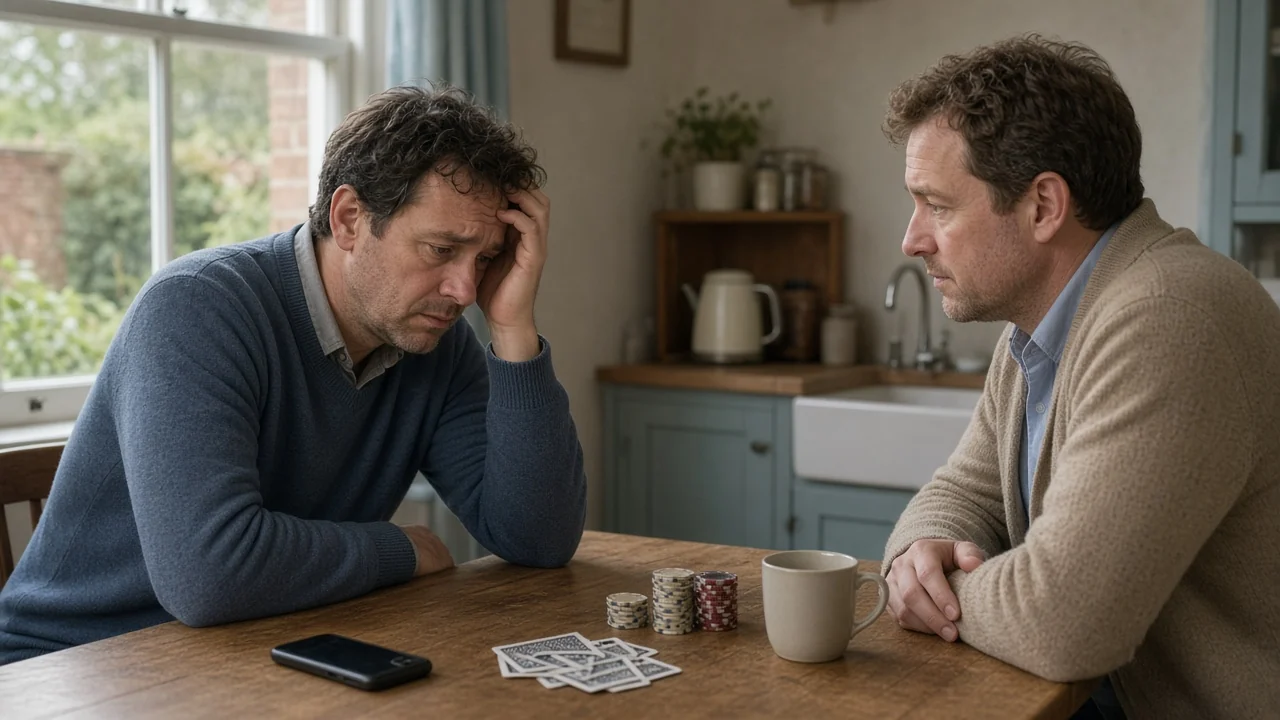
Gambling in Britain is old. Older than the licence that now governs it, older than the Gambling Act that tried to tidy it up, older than the very sensible people who keep trying to tidy it up further. What a country cannot abolish, it regulates; what it regulates, it slowly surrounds with paperwork, helplines, and a public register. This is not a complaint. The paperwork, in this case, is genuinely on the player’s side.
What This Page Is For
Two things, both practical: how to recognise a problem with gambling in yourself, and how to get help with it — today, not eventually. Everything else on this page is context.
How to Spot a Problem
"Problem gambling" resists tidy definitions, but it does not resist observation. The signs are concrete:
- Playing for longer than intended, repeatedly, and being surprised by the time.
- Chasing losses — returning specifically to win back money already lost, which is the single most reliable marker of trouble.
- Borrowing money, or considering borrowing, to gamble.
- Concealing the extent of play from family, friends, or oneself by way of selective accounting.
- Gambling money that is already earmarked for rent, bills, food.
- Feeling restless or irritable when trying to cut down.
- Gambling to escape something else — stress, grief, boredom that has stopped being boredom.
One sign is a warning. Several, repeating, is a pattern. Patterns are what they are.
The Rules of the Market
The United Kingdom Gambling Commission (UKGC) licenses every operator that legally takes bets from consumers in England, Wales, and Scotland. Operating without a UKGC licence is a criminal offence — which means the licence is not decorative, and neither is checking it.
Before depositing anywhere, a player can verify a casino’s licence by checking the operator name or licence number against the UKGC’s public register, which lists current operating and personal licences, and confirming that the operator’s listed domain matches the site actually being used. It takes two minutes. Two minutes against the alternative.
The legal gambling age in the UK is 18. No form of gambling is legal under the age of 16, and parental permission does not override this. Applicants for a UKGC licence must themselves be 18 or over — the rule is applied at both ends.
Operators are required to prompt players to set a deposit limit before their first deposit, and to offer deposit limits, loss limits, session-time reminders, reality checks, and self-exclusion. Since 28 February 2025, remote operators must run light-touch financial vulnerability checks when net deposits exceed £150 in a rolling 30-day period. Since 9 April 2025, online slots carry a £5 per spin limit for players aged 25 and over. Whether these numbers are calibrated correctly is debated; that they exist at all is the point.
Credit cards are banned outright. An operator must not accept payment for gambling by credit card — including through an e-wallet funded by credit, unless the wallet provider can demonstrably prevent such use. The reasoning was blunt: borrowed money should not be fed into games built to retain it.
A player must be able to stop playing at any time and retain their remaining deposit and winnings earned from that deposit. This is a rule, not a favour.
Self-Exclusion
Two layers exist.
The first is casino-level: every gambling business must have its own self-exclusion procedures, with exclusion periods ranging from one day to permanent.
The second is national. Since March 2020, the UKGC has required every online gambling operator to participate in GAMSTOP — a single request excludes a player from all UKGC-licensed gambling sites for six months, one year, or five years. One form, the whole licensed market. The minimum self-exclusion period specified for remote operators is six months, which is deliberately long enough to interrupt a habit and short enough that people actually use it.
Operators must also connect to a nationwide database of self-excluded users and have procedures in place for identifying potential gambling-related harm — a regulatory way of saying that the burden of noticing is not meant to fall entirely on the person least able to notice.
Where to Get Help
This is the centre of the page, not its footnote.
National Gambling Helpline — free of charge, available 24 hours a day, 7 days a week. For England and Scotland, the number is 0808 8020 133. Run by GamCare: https://www.nationalgamblinghelpline.org.uk and https://www.gamcare.org.uk
NHS Wales Helplines — the Wales gambling helpline number is 0808 2819 265: https://www.wales.nhs.uk/services/mental-health/addiction-services
GambleAware — information and signposting to support: https://www.gambleaware.org
National Gambling Treatment Service — treatment for gambling harm: https://www.nationalgamblingtreatment.org.uk
GAMSTOP — the national online self-exclusion scheme: https://www.gamstop.co.uk
The helplines are free, round-the-clock, and staffed by people whose job it is to have this exact conversation. Calling is the low-cost option here, in every sense.
A Plain Sentence
Gambling is not a source of income. It is not a strategy for solving money problems — it is, structurally, a machine for converting money problems into larger ones. UKGC licensees must contribute financially to research, prevention, and treatment of gambling-related harm, which tells you how the regulator itself classifies the product.
One More Thing
If any of the signs above read familiarly — not hypothetically, familiarly — the helpline number is 0808 8020 133 (0808 2819 265 in Wales), and GAMSTOP takes a single request to close the door across the entire licensed market. Both work tonight.
That is the whole apparatus, really: a register to check before starting, tools to use while playing, and a door that locks behind you when you ask it to. Britain spent centuries perfecting the first part. The rest is newer, and better.