Top UK Casinos Accepting Direct Banking Payments
 Available in GB
Understand Open Banking payments, deposit options, withdrawal limits and how to check whether a casino genuinely supports direct banking.

Table of Contents
- What Direct Banking Means at a UK Online Casino
- How Open Banking Casinos Work in Practice
- The Open Banking Casino Payment Method, Explained
- Instant Deposits, Bonuses and Direct Bank Payments
- What Makes an Open Banking Casino Worth Considering
- Direct Banking and the UK Casino Banking Landscape
- Which Payment Methods Sit Alongside Open Banking?
- Direct Bank Deposits Compared with Net Banking Options
- Withdrawals: Why Fast Deposits Do Not Guarantee Fast Cash
- Checking That a Casino Really Accepts Direct Banking
What Direct Banking Means at a UK Online Casino
Direct banking is the plainest description of a casino payment made from a player’s bank account without using a card or opening a separate e-wallet. In the UK market, the term is closely associated with Open Banking: a payment route that connects the casino’s checkout to the customer’s bank through an authorised payment service.
The attraction is easy to understand. A debit card stores payment details with the merchant, while an e-wallet places another account between the bank and the casino. Direct banking removes that extra layer. The money begins in the bank account and is authorised through the bank’s own online security process. Fewer intermediaries, fewer passwords to remember. Banking, stripped of its costume jewellery.
The wording still needs care. “Direct banking” is not necessarily the name of one universal product. A casino may describe the option as Open Banking, bank transfer, instant bank payment, or may display a branded service such as Trustly. Those labels can refer to different payment arrangements, so the presence of the word “bank” alone does not establish that a site offers Open Banking.
Open Banking and the casino account
Open Banking is built around regulated access to banking services. At an online casino, a player chooses the bank-payment option and is transferred to the bank’s online banking portal. The payment details are pre-filled there, and confirmation takes place using the bank’s usual security measures. The casino does not need the player to provide card details or create a separate Trustly account for this route.
Trustly, where offered, facilitates a secure, real-time transfer from the player’s bank account to the casino. Its role is to connect the two sides of the payment rather than to become a conventional wallet holding a balance for future gambling. The bank remains the place where the payment is authorised; the casino remains the merchant receiving it.
This distinction matters because a bank-linked payment is not the same thing as a manual bank transfer. A manual transfer may require the customer to copy account details, enter a reference, and leave the casino’s payment page. An Open Banking flow presents the transaction in a more structured form and sends the player to the bank for approval. The underlying money still comes from the bank account, but the handling is different.
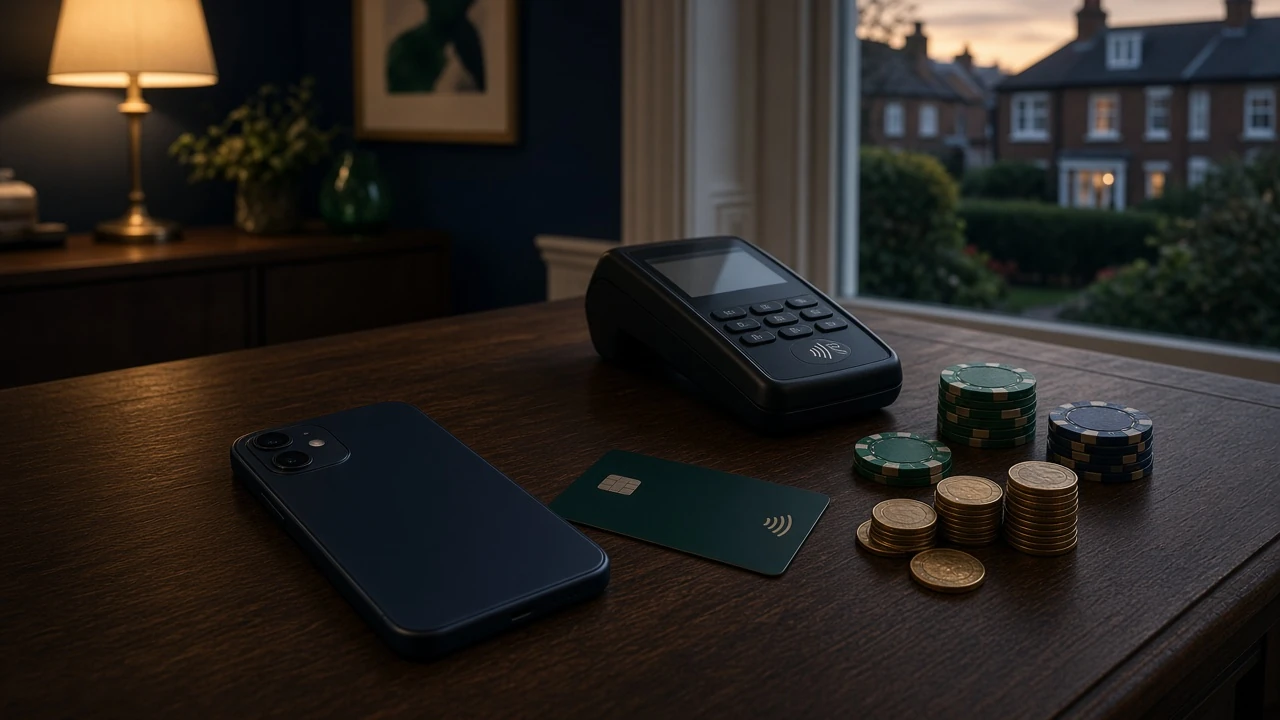
Trustly deposits are typically transferred instantly. That describes the transfer of funds, not every stage of the casino account. An operator may still apply its own account controls, identity procedures, or responsible-gambling checks. Payment speed cannot turn an unverified account into a verified one by sheer optimism.
The UK regulatory setting
A direct bank payment does not place a casino outside gambling regulation. Businesses providing remote gambling facilities to customers in Great Britain generally need an operating licence from the Gambling Commission, including when advertising to GB consumers. The Commission licenses operators and enforces rules covering advertising, game integrity, and financial transactions.
This is why “casinos with Open Banking” is not a sufficient description of a safe or lawful choice. The payment channel and the gambling licence are separate questions. Open Banking describes how money moves. It does not confirm who operates the casino, which games are offered, or whether the operator is authorised to provide remote gambling facilities in Great Britain.
The regulatory distinction also explains why payment branding should not be treated as a guarantee. Trustly can provide the banking connection, but it does not transform every website displaying its name into a UK-licensed casino. The operator carries the gambling obligations. The payment service handles the payment connection. Different jobs, different accountability.
A UK-facing casino may therefore present an Open Banking option while still needing to satisfy the wider requirements imposed on licensed gambling businesses. Advertising, game integrity, and financial transactions remain within the Commission’s regulatory reach. The payment method is only one visible part of that arrangement.
What the phrase means in practice
When people refer to UK Open Banking casinos, they generally mean online casinos where a bank account can be used as the funding source through an Open Banking connection. The essential features are straightforward:
- the payment starts from the casino cashier;
- the player is redirected to the bank’s online banking portal;
- transaction details are pre-filled;
- the bank’s normal security measures confirm the payment;
- no card details or separate e-wallet account are required for the Trustly route;
- the transfer may reach the casino instantly.
That description deliberately avoids promising identical service at every operator. A casino decides which payment services it supports, and the visible checkout can change. One site may offer Trustly; another may use a different Open Banking provider; a third may offer only a conventional bank-transfer route while using similar language in its marketing.
For anyone comparing the top casinos that accept direct banking in 2026, the useful starting point is therefore not a slogan about speed. It is the meaning of the payment label, the identity of the operator, and the relationship between the bank connection and the casino’s regulatory responsibilities. Direct banking is a route for moving money. It is not a licence, a guarantee, or a substitute for knowing who stands on the other side of the cashier.
How Open Banking Casinos Work in Practice
An online casino Open Banking UK payment is designed to keep the bank account at the centre of the transaction. There is no separate wallet balance to create and no card number to enter. Instead, the casino’s cashier connects the deposit request with a participating bank, then sends the transaction into the bank’s own authentication process.
Open Banking Process
Select the Open Banking or Trustly option and enter your desired deposit amount.
Choose your supported bank from the list provided in the payment interface.
Complete the transaction using your bank’s own secure online banking portal.
Wait for the payment service to pass the transaction status back to the casino.
The arrangement may look simple on the screen. Behind it sits a sequence of permissions, bank selection and confirmation. A small amount of choreography, then the money moves.
Starting at the casino cashier
The process begins after logging in to the casino account and opening the deposit page. Payment methods are displayed according to the operator’s arrangements, so Open Banking may be present at one online casino and absent at another. A payment-method provider may be available in the wider market without being offered by every operator.
That distinction matters when comparing Open Banking online casinos in the UK. The label alone is not enough. Availability, fees, withdrawal requirements, and transaction limits vary by operator. The cashier is therefore the first practical source of information, not a decorative list of logos copied across a review page.
Once the bank-transfer option is selected, the cashier generally asks for the deposit amount. The available limits belong to the payment method and the casino’s own account rules. Payment methods have different minimum and maximum transaction limits, and the displayed range is the one that governs the transaction at that moment.
The next screen usually presents a list of supported banks. This is not an invitation to type card details into a third-party form. It is a route into the selected bank’s online banking environment.

Selecting the bank
The player chooses the bank from the payment interface. In a Trustly transaction, Trustly facilitates a direct transfer from the bank account to the online casino without requiring a separate Trustly account or card details.
The choice of bank determines where the next stage takes place. The payment service redirects the player to the bank’s online banking portal, rather than asking the casino to collect ordinary banking credentials. That separation is the important practical feature: the casino initiates the payment, while the bank handles authentication.
The transfer details are pre-filled after the redirection. The recipient, amount and relevant payment information are already prepared, reducing the need to re-enter them manually. This does not remove the approval step. It removes some of the clerical work surrounding it.
A pre-filled form still deserves attention. The bank account and amount should correspond with the intended casino deposit before confirmation. A polished interface is not a substitute for reading what the bank displays. Technology has never cured impatience; it has merely made impatience faster.
Confirming through the bank
Confirmation takes place using the bank’s usual security measures. The exact screen depends on the bank and its authentication system, so the final approval may involve the same security process used for other online banking transactions.
Familiar and widely accepted, typically with minimum deposits of £10–£20.
Services like Skrill or Neteller that create a separate balance between bank and casino.
Options like Paysafecard that use PIN codes for added distance from your bank account.
The casino does not decide whether the bank account is genuine by simply accepting a typed number. The bank’s own security layer confirms the customer’s authority to make the transfer. Once that approval is completed, the payment service passes the transaction status back through the connection between the bank and the casino cashier.
This is why Open Banking is different from entering debit-card details into a gambling website. The account holder authorises the payment inside the bank’s environment, and the transfer is sent directly from the bank account. No additional card record is needed for the deposit.
The journey is therefore made of distinct stages:
- The casino account opens its deposit cashier.
- Open Banking is selected if the operator offers it.
- A deposit amount is entered within the displayed limits.
- A supported bank is chosen.
- The payment service redirects to online banking.
- The transfer details appear pre-filled.
- The bank’s normal security measures are used for confirmation.
- The casino receives the transaction status and updates the account when the deposit is credited.
When the balance updates
Most payment options provide instant deposits, and the verified description of Trustly states that its deposits are typically transferred instantly. That describes the intended movement of the funds, not a promise that every casino account will display the balance at exactly the same moment.
The payment still passes through several systems: the casino cashier, the payment service, the bank and the return message confirming the transaction. A delay in the casino’s account display can therefore be separate from the bank approval itself. The relevant evidence is the status shown in the cashier and the bank record, not merely the appearance of a successful-looking screen.
A failed or cancelled payment should not be treated as a completed deposit simply because the player reached the banking portal. The decisive point is confirmation and the resulting transaction status. If the casino balance does not update, the account history and bank statement provide the clearer record of what happened.
What changes from one casino to another
The mechanics of a direct bank payment can remain recognisable while the surrounding terms change. Some casino sites with Open Banking UK may offer a particular provider, while others may not support that route at all. Operators choose their preferred payment channels, so the absence of Open Banking at one site does not show that the method has disappeared from the market.
The amount permitted, any fee disclosed by the operator, and the treatment of withdrawals must be checked in that casino’s cashier and payment terms. The payment journey explains how the deposit is authorised; it does not create identical conditions across all Open Banking casino sites in the UK.
That is the useful dividing line. The bank confirms the payment. The operator decides whether the route is offered and under which account conditions. One system authenticates the money; the other governs the gambling account.
The Open Banking Casino Payment Method, Explained
Open Banking is a payment method built around a direct connection between a player’s bank account and an online casino. It does not require a casino-specific wallet, a voucher code, or the entry of card details. Instead, an authorised payment service provider can facilitate the transfer between the bank and the gambling account.
Open Banking removes the need to share card details or manage separate e-wallet credentials by connecting the casino directly to your bank.
That distinction matters. A card payment uses the card network as the visible route: the casino receives the transaction through Visa or Mastercard, while the bank account sits behind the card. An e-wallet inserts another account between the bank and the casino. A voucher keeps the payment separate from personal banking altogether. Open Banking removes those extra layers from the payment path.
Trustly illustrates the model. It facilitates a secure, real-time bank transfer directly from the player’s bank account to the online casino without requiring a separate Trustly account or card details. The payment service is therefore less like a new purse and more like a controlled doorway into existing online banking.
How the method differs from cards and wallets
Debit cards remain familiar because the card itself carries the payment identity. Debit card deposits typically have minimums of £10 to £20 and usually have no casino fee, although the terms still belong to the individual operator. A card can be convenient, but it leaves the casino and the bank to reconcile a card transaction rather than a direct account transfer.
With an e-wallet such as Skrill or Neteller, funds first move into the wallet and then onward to the casino. That arrangement can offer separation from the bank account, but it also creates another account, another set of credentials, and another payment relationship. The method is neither better nor worse by definition. It simply adds a middle room to the house.
Paysafecard represents a different compromise. Deposits use a unique PIN code and limit spending to the voucher value without sharing personal financial information with the casino. Its strength is distance from the bank account; Open Banking’s strength is the opposite: a direct, authenticated route from that account.

A casino with Open Banking may therefore appeal to players who prefer not to store card details with a gambling operator or maintain a separate e-wallet. The trade-off is that the bank remains visibly involved in the transaction, and the bank’s own authentication process becomes part of the payment experience.
The regulatory boundary
In the United Kingdom, the payment method sits within a wider legal structure rather than existing as a private arrangement between casino and customer. A payment service provider must operate under the Payment Services Regulations 2017 or an equivalent framework when providing payment services. This requirement concerns the provider’s legal status, not merely the appearance of a familiar banking screen.
The casino’s position is separate. Businesses providing remote gambling facilities to customers in Great Britain generally need an operating licence from the Gambling Commission, including when advertising to GB consumers. The regulator also oversees financial transactions alongside advertising and game-integrity requirements. Payment approval does not replace gambling licensing, and gambling licensing does not make every payment channel available.
This is why an Open Banking casino UK search cannot be settled by a logo alone. Payment-method availability, fees and withdrawal requirements vary by operator. A casino sites with Open Banking page may show the method at one point and remove it later, because operators choose their preferred payment channels. The presence of a bank-transfer icon is not a universal promise.
Transaction limits differ as well. A payment-method review reports that methods carry different minimum and maximum transaction limits, so the relevant terms are those displayed by the casino and payment provider at the time of use. Neat labels conceal untidy conditions.
Open Banking is consequently neither a card substitute in every respect nor a guarantee of frictionless banking. It is a regulated payment route whose value comes from the direct bank connection, while its practical boundaries are set by the provider, the operator, the bank and the rules governing each of them.
Essential Verification
- Check the operator’s UK Gambling Commission licence first.
- Verify the specific transaction limits and fees in the cashier.
- Distinguish between instant deposit speed and actual withdrawal processing times.
Instant Deposits, Bonuses and Direct Bank Payments
For a casino that accepts direct banking deposits in the UK, the attraction begins at the cashier. Instead of entering card details or loading a separate wallet, the payment is authorised through a bank account. Trustly, for instance, facilitates a direct bank transfer to an online casino without requiring a separate account or card details. The deposit is described as secure and real-time, and Trustly deposits are typically transferred instantly.
“Instant” has a narrow meaning here. It concerns the movement of funds into the casino balance, not the entire deposit-to-withdrawal journey. A payment can appear promptly while the account still remains subject to KYC verification, deposit limits, responsible-gambling controls, or a request for further information. The money may have arrived. The paperwork has not necessarily finished.
That distinction matters when comparing an online casino that accepts direct banking deposits with one offering only a slower bank-transfer route. Most payment options provide instant deposits, but the label does not erase the conditions attached to the method. Payment methods have different minimum and maximum transaction limits, and those limits may be set by the operator, the payment service provider, or the bank involved. A casino that accepts direct banking deposits may therefore show the method in its cashier while restricting the amount available to a particular account.
What an instant deposit does — and does not — promise
An instant deposit places funds in the gambling account without the waiting period associated with a conventional transfer. It does not promise that every bank, account type, or transaction will be supported. Availability is a practical question at the cashier, not a permanent characteristic of the casino brand.

The distinction also helps separate a direct-banking payment from a promotion. A casino may advertise an instant deposit while attaching a bonus to the same transaction. The speed of the banking step says nothing about the fairness, eligibility, or withdrawal conditions of that offer. Two separate arrangements are being made: one moves money; the other governs promotional play.
No-deposit bonuses need careful reading
The phrase “no-deposit bonus” sounds wonderfully frictionless. It is not necessarily so. A player may receive bonus funds without making a deposit, yet the promotion can still impose identity checks, game restrictions, maximum conversion rules, or wagering requirements. The absence of a deposit is not the absence of conditions.
A single affiliate-style industry review reports wagering requirements of 30x to 50x the bonus amount for no-deposit bonuses. That range should be treated as a reported promotional detail, not as a universal UK rule. The exact terms belong to the individual offer and may determine whether winnings can be withdrawn at all.
This is especially important when a search is framed around an Open Banking casino no-deposit bonus in the UK. Open Banking describes the funding channel; it does not create or validate the bonus. A casino can support direct bank payments and offer no no-deposit promotion. Conversely, a promotion may be available only after KYC verification or under conditions that make a deposit unnecessary but withdrawal far from automatic.
The sensible order is therefore plain: inspect the payment screen, confirm the available banking route and its limits, then read the bonus terms separately. Fast money is useful. Vague terms are not.
What Makes an Open Banking Casino Worth Considering
The label “best Open Banking casinos” suggests a neat ranking, but the available evidence does not support one. Payment services are not fixed features of a universal catalogue. Operators choose which channels to offer, and the same Open Banking route may appear at one casino while being absent at another. A sensible comparison therefore starts with verification, not a polished badge.
- Verify the operator’s licence on the Gambling Commission register.
- Read the specific terms for bonuses and wagering requirements.
- Assume a fast deposit guarantees a fast withdrawal.
- Treat a payment branding logo as a guarantee of a gambling licence.
Licensing comes before convenience
A business providing remote gambling facilities to customers in Great Britain generally needs an operating licence from the Gambling Commission, including when advertising to consumers in Great Britain. The regulator licenses operators and enforces rules covering advertising, game integrity and financial transactions. That makes licensing more than a decorative footer. It is the first practical test for a safe Open Banking casino.
The check is especially important when a site presents itself as a new Open Banking online casino. “New” describes a commercial launch, not a lower regulatory threshold. A modern payment interface cannot compensate for uncertainty about the operator behind it. Nor does the presence of a familiar bank-transfer option prove that the gambling business itself is properly authorised.
Confirm the payment route itself
An Open Banking deposit casino should display the method clearly at the cashier, rather than mentioning it only in promotional copy. The relevant question is not whether the site accepts bank payments in some broad sense, but whether the available route actually connects the casino payment to the customer’s bank account through the stated payment service.

Availability is operator-specific. A payment-method comparison in a specialist review source reports that some methods are unavailable because operators select their preferred payment channels. That distinction matters for searches for Open Banking deposit casinos in the UK: a method described across the market may still be missing from an individual cashier.
The same caution applies to sites described as instant Open Banking casinos. A fast authorisation flow is a feature of the payment route, not a promise that every account, bank or transaction will receive identical treatment. The cashier’s current terms carry more weight than a slogan.
Read the limits and fees
Payment methods have different minimum and maximum transaction limits, according to a specialist review source. Those limits can determine whether a payment option is useful at all. They should be visible before a deposit is confirmed, alongside any processing charge and any relevant restriction attached to the payment service.
Fees deserve equal attention. Payment-method availability, fees and withdrawal requirements vary by operator. A site may offer the desired Open Banking channel while applying conditions that make another route more suitable for a particular deposit-to-withdrawal journey. Calling every such site one of the best Open Banking online casinos would confuse availability with value.

Clear wording is a modest virtue, but a valuable one. Ambiguous references to “banking fees” leave the reader unable to tell whether a charge comes from the casino, the payment service provider or the bank. Money dislikes fog.
Judge the withdrawal policy separately
Open Banking withdrawal casinos should be assessed on how winnings are handled, not merely on how quickly an account can be funded. The withdrawal page should state the available destination, applicable requirements and any restriction affecting the chosen method. Deposit convenience is only one half of the arrangement.
This is also where claims about fast-withdrawal Open Banking casinos need restraint. A payment option can be available for deposits without being available for withdrawals, and an operator may impose requirements that do not apply at the funding stage. The crucial comparison is therefore between the advertised route and the actual withdrawal terms.
A careful shortlist can be simple: a verifiable licence, a visible Open Banking option, transparent limits and fees, and withdrawal conditions that are stated before money is committed. That framework is more reliable than an invented list of “top” or “best” sites. No ranking is established here because operator-by-operator evidence is not available.
Direct Banking and the UK Casino Banking Landscape
Direct banking sits in a crowded UK payment landscape. It is not the only route between a bank account and an online casino, but it occupies a distinct middle ground: more direct than a card, less detached than a voucher, and generally more structured than sending a traditional bank transfer.
The differences matter because “fast payment” is not one uniform experience. A deposit may be authorised quickly while a withdrawal follows a separate timetable. The casino’s available channels, transaction rules and processing arrangements still decide what happens after the button is pressed.
Cards: familiar, but not interchangeable
Debit cards remain a familiar way to fund gambling accounts. Deposits typically carry minimums of £10 to £20 and usually have no casino fee. That straightforwardness explains their persistence: Visa and Mastercard are recognisable financial tools, not specialist gambling products.
Credit cards are a different matter. The Gambling Commission banned credit-card gambling transactions in April 2020 for operators licensed in Great Britain. A UK-licensed casino therefore cannot treat a credit card as an ordinary alternative to direct banking. The distinction is regulatory rather than cosmetic.

Direct banking avoids entering card details and connects the payment more closely with the player’s bank account. It also avoids the peculiar theatre of a card being accepted everywhere until gambling is involved.
E-wallets and vouchers
E-wallets create a separate balance between the bank and the casino. They can be convenient for users who prefer not to disclose card details to every gambling operator, although their availability and conditions remain operator-specific. They are not direct banking in the strict sense: the casino receives money from the wallet, not directly through the player’s bank-authorised payment journey.
Vouchers take the separation further. Paysafecard deposits use a PIN and limit spending to the voucher value without sharing personal financial information with the casino. That can suit controlled budgeting, but Paysafecard is commonly accepted for deposits while withdrawals to it are rarely supported. A deposit route is not automatically a cash-out route.
Traditional bank transfers
A traditional bank transfer is closer to direct banking in appearance, yet its handling is usually less immediate. Direct bank transfers typically take three to five business days for deposits and withdrawals. The transfer may be familiar and transparent, but it is not necessarily designed around the casino checkout in the way an integrated bank-payment option is.
That makes the wider landscape less a contest between “good” and “bad” methods than a question of fit. Cards prioritise familiarity, wallets create a separate payment layer, vouchers limit exposure to a stored value, and bank transfers favour conventional account-to-account movement.
For a casino with direct banking in the UK, the meaningful comparison is therefore the whole payment route: how funds enter, how the operator handles them, and whether the same method can support the eventual withdrawal. Speed is only one part of the arrangement. Sometimes, the plumbing is the product.
Which Payment Methods Sit Alongside Open Banking?
An Open Banking casino payment method sits within a wider payment menu rather than replacing every other route. The available choice depends on the operator, its payment service providers, and the rules attached to each transaction. A familiar logo is not a universal promise. Fees, limits and withdrawal conditions can differ between casinos, even when the same method appears on both cashier pages.
Are credit cards allowed for gambling in the UK?
No, the Gambling Commission banned credit-card gambling transactions for licensed operators in Great Britain in April 2020.
Does Open Banking mean the casino is licensed?
No, Open Banking describes how money moves, whereas a gambling licence determines the legality and regulation of the operator.
Is a deposit always instant?
While many services offer instant transfers, actual balance updates may be delayed by operator-specific identity or security checks.
Cards
Visa and Mastercard debit cards remain familiar options for casino deposits because many customers already use them for everyday purchases. At UKGC-licensed casinos, credit card gambling transactions are not permitted, so a card listed for gambling should not be assumed to mean a credit card. Debit card deposits typically have minimums of £10 to £20 and usually carry no casino fee.
Cards can be less consistent for withdrawals. The route may involve checks before winnings are released, and the original-payment-method policy can affect how funds are returned. Familiarity, in other words, is not the same as flexibility.
E-wallets
Skrill and Neteller are separate online wallets used for both deposits and withdrawals. Deposits through these services are instant, while withdrawals typically clear within 24 hours. That makes them a practical comparison with an Open Banking instant deposit casino, although the payment experience is different: the wallet holds the funds before they reach the casino.
A casino may accept one e-wallet and reject another. Availability is an operator decision, not a property of the gambling market as a whole.
Vouchers
Paysafecard works through a PIN linked to the voucher value and can allow a deposit without sharing personal financial information with the casino. It is commonly accepted for deposits, but withdrawals to Paysafecard are rarely supported. This distinction matters when considering the entire deposit-to-withdrawal journey rather than the first payment alone.
Bank transfers
Traditional bank transfers remain distinct from Open Banking casino payment methods. They move money between bank accounts but may involve more manual handling and a slower timetable. The cashier’s wording matters: “bank transfer” does not necessarily mean an instant banking casino payment.
Cryptocurrency
Cryptocurrency deposits are near-instant, and withdrawals typically settle within an hour, according to a profile review. Bitcoin, Ethereum, USDT and other cryptocurrencies are not interchangeable with UKGC casino payment options: cryptocurrency deposits are not accepted at UKGC-licensed casinos. Their presence therefore says something about the operator’s regulatory position, not simply its speed. Fast money. Different boundaries.

Direct Bank Deposits Compared with Net Banking Options
A direct banking casino deposit is a bank-funded payment made without entering card details or loading a separate wallet. In practical terms, that can mean a transfer from a domestic account to the operator, or a bank-authenticated payment route that links the two sides. “Net banking” is a looser label: it may describe any casino payment using online banking, so the exact method still needs checking at the cashier.
The important distinction is not the marketing name but where the money travels. A domestic bank transfer moves through the UK banking system; an international wire may pass through correspondent banks before reaching the operator. A specialist industry review gives direct bank transfers a stated deposit timeframe of three to five business days. That is a different proposition from a casino with instant banking, where the payment page may confirm the transaction quickly but the underlying service and account-crediting rules remain operator-specific.
Timing, limits and fees
Speed is only one part of a direct banking casino site’s terms. Payment methods have different minimum and maximum transaction limits, according to a specialist industry review, and those limits may apply separately to a single deposit, a daily total or an account status. The cashier should therefore be treated as the operative document, not a broad claim that a site accepts banking.
A SWIFT wire is a more cumbersome route. One specialist industry review states that it can take up to seven business days and generally carries higher fees than a domestic bank transfer. That distinction matters when comparing top direct banking casino sites: a transfer described as “banking” may be domestic, international, or an Open Banking service with entirely different handling.

The phrase trusted direct banking casino should also mean more than a polished payment button. A credible casino banking guide separates the advertised deposit speed from the time required for funds to appear in the gambling balance, and states the applicable limits and fees. If those terms are absent, the label “instant” explains very little.
For a net banking casino, the sensible comparison is therefore narrow: identify the transfer route, read the deposit limits, check whether fees are disclosed, and distinguish domestic processing from SWIFT. No invented ranking is needed. The banking rails tell enough of the story.
Withdrawals: Why Fast Deposits Do Not Guarantee Fast Cash
An instant deposit says little about the return journey. A direct banking casino may receive funds promptly, yet a withdrawal can still wait for internal checks, identity confirmation, and the operator’s chosen payment rules. The deposit button is not a promise about the cashier’s other direction.
Trustly is one example of the distinction. A profile payment-method review states that Trustly withdrawals are often processed within the same day. That describes processing by the casino, not necessarily the moment when the money becomes available in the bank account. The receiving bank and any intervening checks still matter.
The same caution applies to other routes. According to a profile payment-method review:
- e-wallet withdrawals are quoted as processing within 24 hours after internal review;
- cryptocurrency withdrawals can take under an hour;
- debit card withdrawals take one to three business days;
- bank transfers take three to five business days.
These are reported processing times, not a universal timetable for every UK operator. Payment-method availability, fees and withdrawal requirements vary by operator, while the applicable terms may set different thresholds or impose additional checks.
A direct banking casino withdrawal can therefore be fast without being instant. Open Banking-linked services may move money more quickly than a conventional bank transfer, but the casino may first require KYC verification and confirmation that the payment route belongs to the account holder. Bonus funds can also trigger payment-method verification before winnings are released.
The original payment method matters too. At a non-GamStop casino, the original-payment-method policy applies to withdrawals up to the deposited amount. That can redirect part of a withdrawal back through the funding route before any remaining balance is sent elsewhere.
The sensible measure is the complete deposit-to-withdrawal journey, not the speed of the first transaction. Fast in. Checks first.
Checking That a Casino Really Accepts Direct Banking
This page highlights UKGC-licensed casinos that accept direct banking, with key details to help you assess their bonuses, minimum deposits and stated payout times. Use the overview to identify which offers best match your preferences.
License: UKGC Operator Licence · Bonus: £20 bonus · Payout speed: Within 48 hours · Min. deposit: £10 Silverbond Enterprises holds a UKGC Operator Licence and offers a £20 bonus. Its minimum deposit is £10, with payouts stated as available within 48 hours.
License: UKGC Operator Licence · Bonus: £200 welcome bonus · Payout speed: Within 48 hours · Min. deposit: £10 32Red is a UKGC-licensed operator offering a £200 welcome bonus. It has a £10 minimum deposit and states that payouts are made within 48 hours.
License: UKGC Operator Licence · Bonus: £100 bonus · Payout speed: Within 24 hours · Min. deposit: £10 Genesis Global Limited is licensed by the UKGC and offers a £100 bonus. The minimum deposit is £10, while payouts are stated as available within 24 hours.
License: UKGC Operator Licence · Bonus: £100 bonus · Payout speed: Within 24 hours · Min. deposit: £10 LeoVegas holds a UKGC Operator Licence and offers a £100 bonus. It requires a minimum deposit of £10 and lists payouts within 24 hours.
License: UKGC Operator Licence · Bonus: £50 bonus · Payout speed: Within 48 hours · Min. deposit: £10 Platinum Gaming Limited is a UKGC-licensed operator with a £50 bonus. Its minimum deposit is £10, and stated payout speed is within 48 hours.
License: UKGC Operator Licence · Bonus: £100 bonus · Payout speed: Within 24 hours · Min. deposit: £10 ProgressPlay Limited holds a UKGC Operator Licence and offers a £100 bonus. It has a £10 minimum deposit, with payouts stated as available within 24 hours.
A casino that accepts direct banking should make the payment route visible before any deposit is attempted. The banking option may be labelled Open Banking, instant banking, or by the name of a payment service provider. The label matters less than the route: funds should move from the customer’s bank through an authorised payment service provider, rather than through a card or an unrelated wallet.
Licensing is the first check. Businesses providing remote gambling facilities to customers in Great Britain generally need an operating licence from the Gambling Commission, including when advertising to British consumers. The operator’s name and listed domain can be checked against the Commission’s public register. A site presenting itself as the best online casino that accepts direct banking is making a regulatory claim as well as a payment claim. Marketing polish is not evidence.
KYC verification must also be part of the process. A legitimate operator requires identity verification before allowing deposits and withdrawals, so a request for documents is not, by itself, a warning sign. The payment page should also state any method restrictions, fees, processing conditions, and transaction limits. These details vary by operator; silence is not a favourable term.
Finally, withdrawals are governed by the original payment method principle. Funds up to the deposited amount may need to return through the method used for the deposit, while winnings can be subject to the operator’s stated withdrawal procedure. Non-GamStop casinos may operate under an overseas licence rather than a UK Gambling Commission licence, so their status must not be inferred from the presence of instant banking alone.
No verified operator ranking is available here. The sensible test is documentary, not decorative.
How do casino payment methods work?
They move money between your bank account and the casino through a card, e-wallet, bank transfer or a bank-connected service such as Trustly. Open Banking payments redirect you to your bank’s online portal, where the transaction is confirmed using the bank’s usual security measures.
Why can casino withdrawals take longer than deposits?
Deposits are often instant, while withdrawals may require the casino’s internal review before funds are released. After that, the payment method also affects timing: e-wallet withdrawals typically process within 24 hours, debit card withdrawals take one to three business days, and bank transfers take three to five business days.
What is open banking?
Open Banking lets a casino connect your payment request to your bank’s online banking portal. The transaction details are pre-filled and you approve the payment using your bank’s normal security process, without entering card details or creating a separate e-wallet account.
How do I know if a casino is licensed in the UK?
Check whether the operator holds a Gambling Commission operating licence for providing remote gambling facilities to customers in Great Britain. A payment service such as Trustly does not prove that the casino itself is licensed.
Can a casino ask for verification before paying a withdrawal?
Yes, a casino may apply identity procedures or other account controls before releasing a withdrawal. A fast payment method does not remove those checks.
What should you check before making a casino deposit?
Check the operator’s Gambling Commission licence, the exact payment method offered, its deposit and withdrawal limits, any fees, and the withdrawal requirements. Payment availability and conditions vary by operator.
Can I use a credit card at a UK casino?
No, UK Gambling Commission-licensed operators cannot accept credit card gambling transactions. Debit cards remain commonly accepted, although the available methods depend on the operator.
Created by the ”Casinouk Payments Hub” editorial team.