Best Mobile Casino Pay by Phone Credit UK
 Available in GB
Understand the billing process, payment limits, charges and practical rules behind casino deposits made through a mobile network.
Table of Contents
- How Pay by Phone Credit Works in UK Casinos
- What Makes a Mobile Casino Pay by Phone Credit Worth Using
- Mobile Casinos, Phone Credit and the Games Behind the Deposit
- Phone Credit Deposits: Limits, Charges and the Small Print
- Using Phone Credit for Casino Slots Without Losing the Plot
- Playing Slots with Phone Credit in the UK
- The Phone Credit Casino: Convenient, Narrow and Very British
- Pay by Phone Credit at UK Casinos: The Regulatory Boundaries
- Online Slots with Phone Credit and No-Deposit Offers
- How to Deposit with Phone Credit at a Casino
How Pay by Phone Credit Works in UK Casinos
Pay by Mobile is a way to fund a casino account through a mobile network rather than a bank card or a separate wallet. The deposit is charged to the phone bill or taken from the available balance on a prepaid SIM. In practical terms, mobile casinos using phone credit do not turn the handset into a gambling product. The phone is the billing route; the casino balance remains the place where the money is used.
The process begins at the casino cashier. Once Pay by Mobile is selected, the payment screen asks for the amount, the mobile number and, where required, the relevant network provider. The request then moves through a billing intermediary. There is no simple direct pipe running from the casino to EE, O2, Vodafone or another network. Pay-by-mobile casino deposits are processed through third-party billing systems that work with mobile network operators.
That intermediary is the unglamorous but essential middle layer. It passes the payment request to the network, checks whether the transaction can proceed, and returns the result to the casino. This arrangement explains why the cashier may display a payment brand or billing service that is different from both the casino and the mobile operator. The customer sees a short payment journey; behind it sits a chain of commercial systems agreeing that the charge may be made.
This page highlights UK mobile casino options for players considering payment with phone credit in 2026. Use the listed licensing, bonus, payout-time and minimum-deposit details as a concise starting point for evaluating each operator.
License: UKGC Operator Licence · Bonus: £20 bonus · Payout speed: Within 48 hours · Min. deposit: £10 Silverbond Enterprises holds a UKGC Operator Licence and offers a £20 bonus. Its listed payout speed is within 48 hours, with a £10 minimum deposit.
License: UKGC Operator Licence · Bonus: £200 welcome bonus · Payout speed: Within 48 hours · Min. deposit: £10 32Red is a UKGC-licensed operator with a £200 welcome bonus. Payouts are listed as being available within 48 hours, and the minimum deposit is £10.
License: UKGC Operator Licence · Bonus: £100 bonus · Payout speed: Within 24 hours · Min. deposit: £10 Genesis Global Limited holds a UKGC Operator Licence and provides a £100 bonus. Its listed payout speed is within 24 hours, with a £10 minimum deposit.
License: UKGC Operator Licence · Bonus: £100 bonus · Payout speed: Within 24 hours · Min. deposit: £10 LeoVegas is listed with a UKGC Operator Licence and a £100 bonus. It states a payout speed of within 24 hours and a £10 minimum deposit.
License: UKGC Operator Licence · Bonus: £50 bonus · Payout speed: Within 48 hours · Min. deposit: £10 Platinum Gaming Limited holds a UKGC Operator Licence and offers a £50 bonus. The listed payout speed is within 48 hours, with a £10 minimum deposit.
License: UKGC Operator Licence · Bonus: £100 bonus · Payout speed: Within 24 hours · Min. deposit: £10 ProgressPlay Limited is a UKGC-licensed operator with a £100 bonus. Its listed payout speed is within 24 hours, and the minimum deposit is £10.
From cashier to mobile account
A typical deposit follows this sequence:
- Pay by Mobile is selected in the casino cashier.
- The amount and mobile number are entered.
- The mobile network or billing provider is identified.
- The payment request is approved through the displayed prompt or an SMS confirmation.
- The intermediary confirms the result to the casino.
- The funds are added to the casino balance.
The exact wording of the screens can vary, but the underlying movement is consistent: the casino requests a charge, the billing system sends it towards the mobile account, and the casino credits the corresponding deposit after confirmation.
For a contract customer, the amount is added to the next monthly mobile phone bill. For a pay-as-you-go customer, it is deducted from the available mobile credit. That distinction matters because the source of the money is different even though the casino cashier may look the same. One player receives a larger bill later; another sees the prepaid balance reduced at once.
Pay by Mobile therefore sits somewhere between a payment method and a familiar household expense. It borrows the network’s billing relationship with the customer, while the casino supplies the account receiving the funds. This is why the method can feel more immediate than a bank transfer without being a cash deposit. No bank account is being topped up. The casino balance is.
Why an intermediary is involved
Mobile casinos pay by phone credit through carrier billing systems because casinos and mobile networks perform different jobs. The casino records the gambling account and the deposit. The network controls the phone number, contract or prepaid balance. The intermediary connects those two records and handles the billing instruction.
This also means that a failed request is a payment result, not a mysterious disappearance of money. The billing system either confirms the transaction or reports that it has not gone through. The casino then credits the balance only after receiving the appropriate confirmation. A rejected attempt is not supposed to become a half-completed deposit.
Security is built into the same journey. The mobile number is encrypted using secure connection technology throughout the transaction. Where SMS confirmation is used, the code is unique to that transaction, expires after a few minutes and cannot be reused. It verifies that the person approving the payment has physical possession of the phone connected to the number. A small code, doing a surprisingly serious piece of social administration.
The SMS is not merely a notification saying that money has moved. It can form part of the authorisation itself. The player enters the code, or approves the request presented by the network, and the intermediary sends the verified result back to the casino. Some payment journeys use an in-app confirmation instead. The principle remains the same: the mobile account must be actively linked to the approval.
When the casino balance changes
Once the payment has been accepted, the deposit is credited to the casino balance in less than a minute. That timing belongs to the crediting stage, not to every possible delay before it. An uncompleted SMS approval, a rejected request or a problem in the billing chain cannot produce the same result as a confirmed transaction.
After a successful SMS or in-app approval, funds are typically credited to your casino balance in less than a minute.
The balance shown in the casino account is consequently separate from the balance shown by the mobile network. A prepaid customer may see less phone credit while the casino account shows the deposited amount. A contract customer may see no immediate reduction in a bank balance, because the charge is carried forward to the next mobile bill. The two systems record different sides of the same payment.
This is the basic shape of mobile phone credit casinos in the UK: choose Pay by Mobile, provide the number and amount, authorise the request, and wait for the billing intermediary to confirm the deposit. The method is deliberately narrow. Its purpose is to move money into the casino account through an existing mobile relationship, not to replace the casino cashier, the mobile network or the account itself.
What Makes a Mobile Casino Pay by Phone Credit Worth Using
A mobile casino that accepts Pay by Mobile offers a very particular kind of convenience. The deposit does not begin with a bank card, a separate wallet or a transfer from a current account. It begins with an existing mobile arrangement: a monthly contract or a pay-as-you-go SIM. The casino balance is funded through that connection, with the charge either added to the next phone bill or deducted from available prepaid credit.
That distinction matters. Pay by Mobile is not a general-purpose casino wallet. It is a deposit route attached to the mobile account, and its usefulness depends on whether that account can carry the transaction.

The billing arrangement comes first
Both monthly billing and pay-as-you-go plans can support Pay by Mobile deposits. Contract customers see the amount placed on the mobile bill. Pay-as-you-go customers lose the amount from their available balance. In either case, the payment is tied to the mobile network rather than to a bank account.
This makes the method recognisable in a very British way: the phone, already used for calls, data and the occasional bureaucratic password, becomes a small billing instrument. The arrangement is practical, but not limitless. A mobile account is not meant to behave like an open-ended gambling purse.
The payment option must be available at the casino cashier. When it is offered, the process involves selecting Pay by Mobile, entering the deposit amount, confirming the relevant network and approving the request or SMS prompt. Verification follows before the funds are credited. The method therefore has several points at which the network, the operator and the account holder must agree.
Limits are part of the design
Pay-by-mobile deposits may include built-in deposit limits, and the transaction ceiling is central to the method. The UK market facts state that Pay by Mobile deposits are limited to £30 per transaction. Some source material describes the usual limit as around £30, while another version identifies £30 as the typical maximum per day. Those descriptions do not say precisely the same thing, so the daily figure should not be treated as a substitute for the per-transaction rule.
The distinction is more than editorial housekeeping. A per-transaction ceiling describes one payment. A daily ceiling describes the total permitted across the day. The applicable limit can depend on the operator, the mobile network and the controls built into the payment system. The payment page should therefore be treated as the operative display of the amount permitted for that transaction.
Transaction Limits
Pay by Mobile deposits are often limited to £30 per transaction, and you should always check the specific limits displayed on the payment page.
One source, technology.org, reports that mobile-network spending limits are hardcoded into the payment system and prevent transactions above the applicable thresholds. That is a report about the system described by that source, not a universal claim about every mobile network or every casino arrangement. It does, however, explain why an attempted payment can stop at the network level rather than being handled like an ordinary declined card transaction.
A failed Pay by Mobile deposit does not create a partial charge. That safeguard is important because the payment sits between two accounts: the casino balance and the mobile account. A failed request should not leave money missing from one side while the other remains unfunded.
A narrow method can still be useful
The value of Pay by Mobile lies in separation. A player may prefer not to enter card details into a casino cashier, or may have no suitable card available for the deposit. UK casinos cannot accept credit cards under the ban that came into force in 2020, and only debit cards are eligible for UK casino players under UK Gambling Commission rules. Pay by Mobile sits outside that card process, drawing on the mobile bill or prepaid balance instead.

It is also a method with visible boundaries. The mobile account determines what can be charged. The casino determines whether the payment option is offered. The displayed deposit control determines what can be requested at that point. None of these conditions turns Pay by Mobile into a substitute for a bank account.
That narrowness is the point, not a defect disguised as innovation. The method is designed for a small, defined deposit rather than for moving money freely in and out of an account. Its usefulness comes from fitting a modest payment into an arrangement already in place, without opening another financial channel.
Operator safeguards shape the experience
A credible payment page should make the relevant limit visible when the deposit is being made, rather than leaving the condition buried in the terms. UK-licensed online casinos must offer safer-gambling tools including deposit limits, loss limits, maximum-bet limits, reality checks and time-outs. Responsible-gambling messaging must appear on the payment page alongside the deposit-limit reminder and GamCare signposting.
Those requirements give the cashier a second function. It is not merely a button for adding funds; it is also the place where the operator states what the payment can do and where its boundaries lie. A method that feels frictionless because every warning has been hidden would not be especially well designed. It would merely be quiet.
The wider legal setting is equally clear. Online gambling in Great Britain requires a remote operating licence, and operators serving consumers there must hold a UK Gambling Commission licence regardless of where they are based. The UKGC maintains a public register, allowing the operator name or licence number and the listed domain to be checked against it.
Pay by Mobile should therefore be judged by more than whether a deposit arrives in the casino balance. The relevant questions are practical: whether the mobile arrangement is eligible, what limit appears at the cashier, whether the network accepts the request, and whether the operator presents the safeguards required for a UK-licensed service.
A small payment route. Deliberately so.
Mobile Casinos, Phone Credit and the Games Behind the Deposit
A Pay by Mobile deposit is not a casino game in its own right. It is the quiet mechanism that moves money into the casino balance, after which the familiar business of choosing a reel set, a fishing bonus round or a table game begins. The distinction matters. Searching for mobile casinos that accept phone credit can sound as if the payment method changes the games available. In practice, it changes how the balance is funded; the casino lobby remains the place where the playing choices are made.
A slot built around a compact reel-game format with a visually distinctive theme.
A fishing-themed slot tied to a familiar catch-and-feature structure.
A fishing title offering a different presentation of recreational gameplay.
A gold-themed slot designed for a direct, symbol-led reel experience.
When the deposit is credited immediately, the interval between payment and play is correspondingly short. That does not make every game suitable for every session, nor does it turn a mobile screen into a miniature arcade of equal opportunities. A phone is a narrow stage. Games with clear symbols, readable menus and uncomplicated controls tend to make more sense on it than interfaces designed for a large desktop display.
Four recognisable slot choices
The following titles illustrate the sort of games that may sit behind a mobile-funded casino balance:
- 9 Masks of Fire — a slot built around a compact reel-game format, with its appeal resting on repeated spins and a visually distinctive theme.
- Big Bass Splash — a fishing-themed slot whose identity is tied to the familiar catch-and-feature structure.
- Fishin’ Frenzy — another fishing title, offering a different presentation of the same broad recreational territory.
- Gold Blitz — a gold-themed slot designed for players who prefer a direct, symbol-led reel experience.
These names should not be mistaken for a guaranteed catalogue at every casino accepting Pay by Mobile. Game availability belongs to the operator and its software suppliers, not to the payment channel. A casino can accept mobile billing while offering one of these titles, several of them, or none. The sensible test is therefore two-part: first confirm that the cashier supports Pay by Mobile; then inspect the actual lobby for the games wanted.
That separation is rather revealing. Payment technology is concerned with authorisation, billing and the movement of funds. Game design is concerned with anticipation, repetition and the small theatre of symbols landing in rows. One is infrastructure; the other is entertainment. Confusing them is how a payment label starts to sound like a product category.
What the mobile format changes
Playing through a mobile casino compresses the experience into a more private and portable setting. A slot can be opened from a phone after the balance has been funded, without a separate desktop payment routine. The convenience is real, but it is not a promise of better outcomes. The reels do not become kinder because the deposit came from a mobile balance.
The screen also changes the rhythm of attention. A game such as 9 Masks of Fire or Gold Blitz can be understood quickly because the central action is concentrated on the reels. Big Bass Splash and Fishin’ Frenzy, with their fishing imagery and feature-led presentation, may appeal to players who want more than a plain symbol-matching layout. These are matters of taste, not evidence of superiority.
The age boundary remains firm beneath the casual appearance of mobile play. Gambling in the UK is available only to people aged 18 and over who are based in the country. A phone makes access less ceremonial; it does not make the activity less regulated or less consequential.
The payment method is not the withdrawal method
A mobile-funded balance has a particularly clear boundary once winnings enter the picture. Pay by Mobile is a deposit method, not a route for withdrawing funds. Winnings therefore need to leave through another permitted channel, such as a bank transfer or an e-wallet. The neatness of putting money in through a phone does not create an equally neat way to send money back through the phone bill.
Withdrawal Limitation
Pay by Mobile is a deposit-only method and cannot be used to withdraw your winnings.
That asymmetry can shape the choice of casino as much as the games themselves. Someone interested in Big Bass Splash may care about whether the title is present; someone planning to play regularly may care just as much about the available withdrawal route. The most attractive slot lobby cannot repair a payment arrangement that becomes inconvenient at the point of withdrawal.
A profile-focused review reports that PlayOJO does not offer Pay by Phone deposits. That is a statement about one operator’s payment menu, not a rule governing mobile casinos as a whole. The same distinction applies to the alternatives attributed to an operator’s own guidance: Apple Pay, Google Pay, bank transfer and PayPal are presented there as mobile-friendly options that support both deposits and withdrawals. They belong to the comparison of payment arrangements, not to the games behind them.
In the end, the phrase “best mobile casinos pay with phone credit” describes a compound decision. The casino must offer the desired games, accept Pay by Mobile, and provide a workable way to withdraw. The first two serve the session. The third decides how the story ends.
Phone Credit Deposits: Limits, Charges and the Small Print
A phone credit deposit casino arrangement looks simple at the cashier: select Pay by Mobile, enter an amount, and let the charge reach the mobile account. The financial detail sits underneath that neat surface. Contract customers see the deposit added to the next mobile bill; pay-as-you-go customers see it deducted from available credit. In both cases, the casino balance is funded through carrier billing rather than a conventional card payment.
The first boundary is the transaction limit. UK market material is not entirely consistent about how it describes the figure: one version calls the usual maximum £30 per transaction, while another describes the typical maximum as £30 per day. The distinction matters. A per-transaction ceiling and a daily ceiling are not the same control, even when the same amount appears in both descriptions. The applicable limit should therefore be treated as the one displayed by the operator and payment system at the point of deposit, rather than as a universal promise about every casino phone credit deposit.
The £30 ceiling and built-in controls
The £30 transaction cap is also included in the UK market’s stated payment restrictions. Operators must display phone-billing deposit limits during the transaction, not hide them solely in the terms and conditions. A casino phone credit deposit may therefore be refused before the charge reaches the mobile account if the amount exceeds the permitted threshold or another control has already been reached.
Pay-by-mobile deposits can carry built-in deposit limits in addition to the transaction restriction. These controls belong to the payment route as well as to the casino account. The limits are not decorative wording. They are designed to stop an amount outside the applicable threshold from being submitted successfully.
Technology.org has reported that mobile-network spending limits are hardcoded into the payment system and prevent transactions above the relevant thresholds. That is a report about the system described by that source, not a reason to assume that every network, operator and account behaves identically. The practical lesson is less glamorous but more useful: a failed request may be blocked by the payment infrastructure before it becomes a charge.
A failed Pay by Mobile deposit does not create a partial charge. That matters where a player sees an error after submitting a request. The failed attempt is not meant to produce a smaller, mysterious deduction from the bill or prepaid balance.
While many deposits are straightforward, some billing arrangements may apply fees ranging from 15% to 33% or more. Always verify the final amount at the cashier.
Fees are separate from the deposit amount
The amount selected at the casino cashier is not necessarily the full economic cost of using the method. Pay-by-mobile casino deposit fees may be applied by the operator or billing arrangement. A single specialist review gives a possible range of 15% to 33% or more, depending on the casino. That range comes from one review, so it should not be presented as a market-wide tariff or as a charge that every phone credit deposit casino applies.
The fee question deserves attention because mobile billing can disguise the extra cost. A contract customer may notice the charge only when the next bill arrives, while a prepaid customer sees the balance fall immediately. The transaction can therefore feel like a small administrative convenience even when the amount removed from the mobile account is higher than the amount credited to the casino balance.
The cashier’s wording should make clear whether a fee is included, added separately, or governed by the particular payment provider. If it does not, the deposit amount and the billing amount should not be treated as automatically identical. Small print earns its reputation honestly.
When affordability checks enter the picture
UK rules attach an additional affordability control to phone-billing deposits. Operators must conduct affordability assessments when such deposits exceed £500 within a rolling 30-day period. This is not the same as the ordinary transaction cap. The £30 ceiling controls the individual payment; the £500 threshold concerns accumulated phone-billing deposits over the stated period.
That distinction prevents two common misunderstandings. Reaching the affordability threshold does not mean that a single deposit can suddenly exceed £30. Nor does staying below £30 on each attempt remove the possibility of an assessment if the combined deposits cross the relevant level.
The system is therefore narrow by design: a casino phone credit deposit is not an open-ended substitute for a bank-funded account. Its limits sit at several layers—the individual transaction, the mobile account’s own spending controls, any casino deposit limit, and the cumulative affordability trigger. Convenient, yes. Boundless, no.
Using Phone Credit for Casino Slots Without Losing the Plot
A mobile casino using phone credit has one useful characteristic for slot players: the deposit is attached to an existing mobile arrangement rather than a separate payment account. At a UK casino, the balance may be funded through a monthly mobile bill or deducted from a pay-as-you-go SIM balance. The casino account, not the handset, holds the money for play.
That distinction matters. Phone credit is not a special kind of slot stake, and it does not turn the mobile network into a casino wallet. It is simply the route by which funds reach the casino balance. Once credited, those funds are used for slots under the casino’s own game and account rules.
From phone credit to the reels
The practical sequence is brief. At the casino cashier, the player selects Pay by Mobile, enters the deposit amount, confirms the mobile network and approves the request or SMS prompt. Verification follows before the funds are credited. The amount then appears in the casino balance, ready for slot play.
Choose Pay by Mobile at the casino cashier.
Input your deposit amount and mobile phone number.
Confirm the request via the displayed prompt or an SMS verification code.
Wait for the intermediary to confirm the result and for the funds to appear in your balance.
Pay-by-mobile deposits are credited immediately, with the more cautious description being less than a minute. That timing suits a short session: there is no need to leave the slot game, wait for a bank transfer or move money between separate wallets. A small convenience, but convenience is often how payment habits become permanent.
The same basic route applies whether the SIM is contract-based or pay-as-you-go. Contract customers see the charge on the monthly bill; prepaid customers lose the amount from their available mobile balance. The source of the money changes. The casino balance does not.
What the method does not change
Using phone credit for slots does not remove the payment limits attached to Pay by Mobile. The deposit cap remains part of the method, so the balance cannot be treated as an open-ended supply for repeated play. This is where the apparently frictionless experience acquires a boundary. The reels may continue without ceremony; the funding route does not.
A player considering pay using phone credit for casino slots therefore needs to separate two decisions:
- whether the casino balance can be funded through the mobile account;
- whether the available balance is suitable for the intended slot session.
The first is a payment question. The second belongs to play itself. Blurring them is how a quick deposit starts pretending to be a budget.
For mobile slots using phone credit, the attraction is clear enough: funds arrive directly in the casino account, and both monthly billing and prepaid arrangements can support the method. Its limits are equally clear. Phone credit supplies the deposit; it does not create a separate withdrawal route or alter the slot experience once the money is there.
Short session. Clear boundary.
Playing Slots with Phone Credit in the UK
Phone credit slots are not a separate class of games. Pay by Mobile funds the casino account; the slots remain the same products offered through that account. Once the balance has been credited, it can be used for eligible slot play under the casino’s normal rules. The mobile network is involved in the deposit, not in the design, odds or identity of the game.
That distinction matters because the phrase “phone credit slot sites” can suggest a special catalogue of mobile-only machines. There is no such implication in the payment method itself. A casino may offer slots that run well on a phone, but the funding route does not turn them into different games. A small screen and a mobile bill are separate arrangements, despite the tidy sound of the phrase.
How the balance reaches the reels
A Pay by Mobile deposit is added to the casino balance through either a monthly phone bill or an available prepaid mobile balance. After that credit appears, the casino treats it as account funds rather than as telephone credit. The practical result is simple: the deposit can support slot play, but the mobile account does not become a wallet inside the game.
The amount available for this route is constrained. One set of source material describes the usual Pay by Mobile deposit limit as around £30, while another states a typical maximum of £30 per day. Those descriptions should not be silently merged. The applicable limit depends on the payment arrangement and the operator’s displayed controls, so the casino cashier remains the relevant point of reference.
This makes phone credit slots in the UK most suitable for a contained deposit rather than repeated funding. The method has a narrow doorway. The games may offer a broad choice, but the balance entering them is not unlimited.
What happens to winnings
Pay by Mobile is a deposit method only. It cannot be used to withdraw slot winnings. Any balance that later needs to leave the casino must use a separate withdrawal route offered by the operator, rather than returning to the mobile bill or prepaid balance.
Can I withdraw money to my phone bill?
No, Pay by Mobile is strictly a deposit method. Winnings must be withdrawn via other channels like bank transfers or e-wallets.
Is there a limit on how much I can deposit?
Yes, there is typically a £30 per transaction limit, though you should check the specific terms of your provider.
So, to play slots with phone credit in the UK is to use mobile billing at the beginning of the journey, not throughout it. The deposit may open the account balance quickly; it does not define the slot session, and it does not provide the exit. The reels are mobile-friendly. The money is less so.
The Phone Credit Casino: Convenient, Narrow and Very British
A phone credit casino is a distinctly British arrangement: the casino balance is funded through the mobile account already attached to everyday life. No separate wallet needs to be opened for the deposit. The charge follows the mobile plan instead.
For contract customers, the amount appears on the next monthly phone bill. For pay-as-you-go customers, it is deducted from the available mobile credit. That distinction matters. A contract account turns the deposit into a line on a household bill; a prepaid account makes the balance visible immediately, because the credit simply becomes smaller. The same casino payment therefore carries different meanings depending on how the phone is funded.
This is what gives mobile casino phone credit its particular social shape in the UK. The mobile phone is not merely a device for reaching the cashier. It becomes part of the payment relationship, standing between the gambling operator and the customer’s ordinary communications account. The arrangement is practical, but narrow: it funds the casino balance and little else.
A mobile phone credit casino also leaves a small paper trail in the form of a text message. Pay-by-mobile deposits typically generate a confirmation SMS, creating a clear signal that the transaction has been accepted. In a culture accustomed to treating the phone as a personal key to banking, travel and public services, that message feels less like decoration than a receipt reduced to its smallest possible form.
The important limitation arrives when the balance turns into winnings. Pay by Mobile is a deposit route, not a withdrawal route. Winnings cannot be sent back to the phone bill or restored to a prepaid balance. A bank transfer or e-wallet is typically needed instead. The money must leave through another channel.
That separation is revealing. The phone makes entry easy to attach to an existing financial routine, while withdrawal belongs to a more formal payment system. Convenience goes one way. Control, verification and the eventual return of funds belong elsewhere. Very British, in its own restrained fashion: familiar technology at the front door, stricter paperwork at the exit.
Pay by Phone Credit at UK Casinos: The Regulatory Boundaries
In the UK, Pay by Mobile sits inside a tightly controlled gambling framework. It is not an unmarked shortcut around ordinary payment safeguards. The rules apply to the casino, the billing arrangement and the point at which money is requested.
The clearest boundary is the transaction ceiling: UK-licensed casinos must limit a Pay by Mobile deposit to £30 per transaction. Published sources describe the daily position differently. One version presents £30 as the typical maximum per day, while another describes £30 as the usual transaction limit without treating it as a daily cap. That distinction matters, because a transaction limit and a daily limit are not the same control.

Operators must show phone-billing deposit limits at the payment stage, rather than burying them solely in the terms and conditions. Pay-by-mobile systems may also contain built-in deposit limits, so the amount available at checkout can be narrower than the headline ceiling. The payment page must display responsible-gambling messaging alongside the limit reminder and a signpost to GamCare. A small screen, in other words, is expected to carry a considerable amount of public policy.
A further safeguard applies when phone-billing deposits exceed £500 within a rolling 30-day period. At that point, the operator must conduct an affordability assessment. The rule recognises something that payment design can otherwise disguise: adding a deposit to a phone bill can make gambling feel detached from spending, even though the charge remains real.
These controls operate alongside the wider UK framework. Online casinos serving Great Britain require a UK Gambling Commission licence, and licensed operators must provide safer-gambling tools such as deposit and loss limits, reality checks and time-outs. Pay by Mobile is therefore a narrow funding route, not a regulatory loophole.
Online Slots with Phone Credit and No-Deposit Offers
Pay by Mobile and a no-deposit offer belong to different parts of the casino experience. One is a payment method; the other is a promotion. Confusing them produces the sort of bargain that looks generous until the small print arrives.
A Pay by Mobile deposit adds funds to an online casino balance by charging a contract customer’s phone bill or deducting money from a pay-as-you-go balance. That balance can then be used for casino games, including online slots. In that sense, online slots pay with phone credit only indirectly: the mobile account funds the casino wallet, not the slot itself.
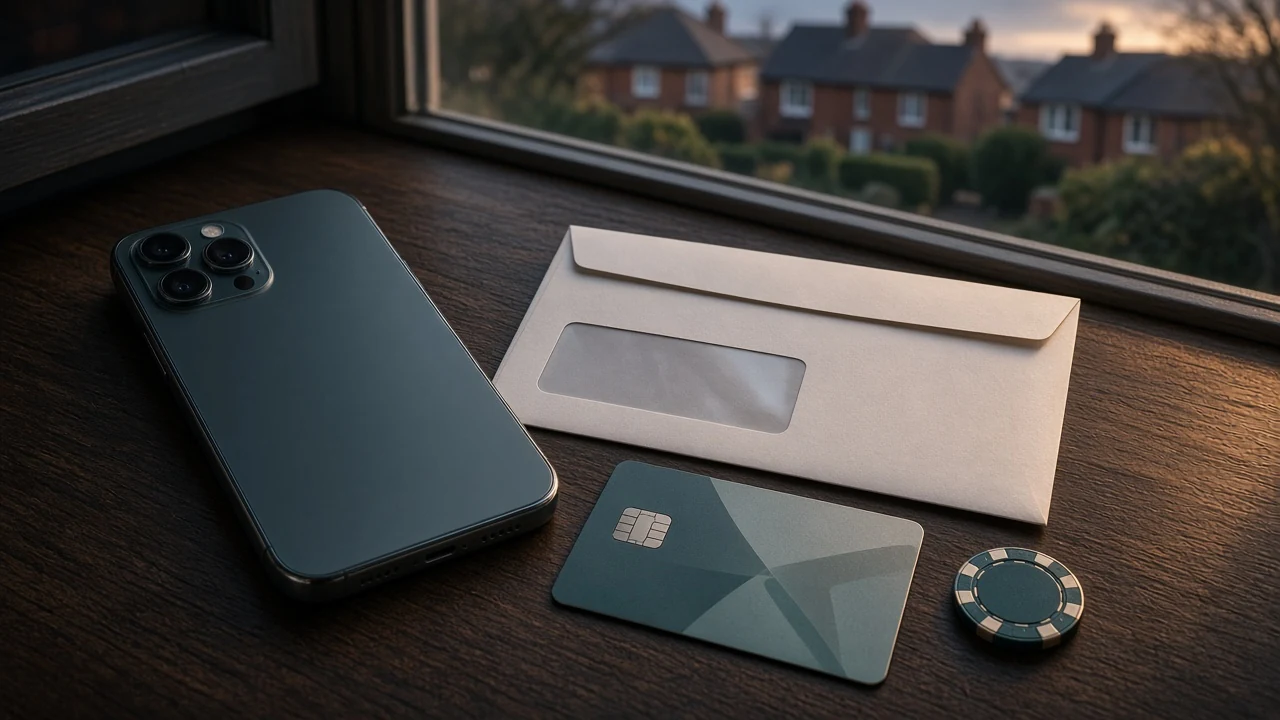
A no-deposit offer works differently. It does not mean that phone credit has paid for the spins, nor does it turn a mobile balance into promotional money. It is an offer attached to the casino account, while Pay by Mobile is the route used to add deposited funds. The two may appear on the same casino site, but they are not interchangeable.
The distinction matters most when winnings are involved. Pay by Mobile is deposit-only. It cannot receive money back from the casino, whether the balance came from ordinary funds or slot play. Winnings therefore have to leave through another permitted channel, such as a bank transfer or an e-wallet. A bank transfer provides a route to a bank account, while an e-wallet keeps the withdrawal separate from the mobile bill.
So the phrase “online casinos pay with phone credit, no deposit” describes two separate ideas rather than one product. Phone credit can fund the account. It cannot become the withdrawal account. The telephone remains an entrance, not an exit.
How to Deposit with Phone Credit at a Casino
A pay-by-mobile deposit is a short cashier process, but each stage has a specific job. The casino selects the payment route; the mobile network confirms that the billing arrangement can be used; an intermediary connects the two. Nothing is charged merely because a casino page has been opened.
The payment sequence
-
Open the casino cashier. Choose Pay by Mobile from the available deposit methods. The option may be handled through a payment intermediary working with the mobile network rather than through a direct casino-to-network connection.
-
Select the mobile provider. Confirm the network linked to the number, such as EE, O2, Three or Vodafone, where that provider is supported. The available choice depends on the casino and the billing arrangement.
-
Enter the deposit details. Add the amount and the mobile number. A contract customer is charged through the mobile bill; a pay-as-you-go customer uses available mobile credit. The request should show the relevant billing information before approval.
-
Approve the request. The intermediary may send an SMS prompt or request confirmation through the payment flow. The number is encrypted through a secure connection during the transaction, so the billing detail is not passed around as plain information.
-
Complete SMS verification. The one-time code belongs to that transaction alone. It expires after a few minutes and cannot be reused. Its purpose is simple: confirming physical possession of the phone connected to the number.
-
Wait for the cashier confirmation. Once the verification succeeds, the payment is passed to the casino account. A confirmation text may follow. If the approval fails, the deposit does not become a half-completed charge.
The practical distinction is worth keeping clear: the mobile number authorises the payment, while the casino account receives the funds. The phone is the billing instrument, not a second casino wallet.
How do pay-by-mobile casino deposits work?
You select Pay by Mobile at the casino cashier, enter the amount and mobile number, and approve the request through an SMS code or in-app confirmation. A payment intermediary sends the charge to the mobile network, and the casino credits the deposit after confirmation.
How Pay by Phone Billing Works at Online Casinos?
Contract customers have the amount added to their next mobile bill, while pay-as-you-go customers have it deducted from their available credit. The deposit is normally credited to the casino balance immediately after the billing request is approved.
What is uk casino pay by mobile?
It is a casino deposit method that charges a contract mobile bill or deducts money from a prepaid mobile balance. The funds are then added to the player’s casino account.
How do you pay by mobile at an online casino?
Choose Pay by Mobile in the cashier, select or confirm your network, enter the amount and mobile number, and approve the request by SMS or in-app confirmation. The casino credits the balance once the payment intermediary confirms the transaction.
Are there fees for Pay by Mobile casino deposits?
Yes, Pay by Mobile deposits may carry fees ranging from 15% to 33% or more, depending on the casino.
Prepared by the Casinouk Payments Hub editorial staff.